The 2026 wholesale market is moving beyond step counting. Buyers now expect practical wellness data, longer battery life, and reliable mobile connectivity. A Blood Oxygen SpO2 Fitness Tracker can support these expectations when its design, sensors, and software work together consistently.
This guide examines leading fitness trackers for distributors, retailers, corporate wellness programs, and private-label brands. It considers SpO2 measurement, heart-rate monitoring, sleep features, display readability, waterproofing, battery performance, app compatibility, and production flexibility. Physical details matter. A bright screen helps outdoor users, while a secure strap reduces movement during readings. Clear menus also reduce customer complaints after delivery.
Numbers need context. SpO2 readings may change with motion, cold fingers, loose straps, or different skin conditions. No consumer tracker should replace professional medical equipment or clinical advice. Wholesale buyers should request test reports, product samples, warranty terms, firmware information, and documented quality procedures before placing large orders. Regional compliance requirements must also be checked with qualified professionals.
Some specifications look impressive on paper. Real performance can differ. A lower-cost model may offer strong battery life but a weaker application experience. Another tracker may provide attractive reporting but require frequent charging. These trade-offs deserve honest comparison, not exaggerated claims. This overview uses practical purchasing criteria and current product considerations to help buyers assess quality, risk, and long-term value. The best choice is rarely the device with the most features. It is the one that users can wear comfortably and trust every day.
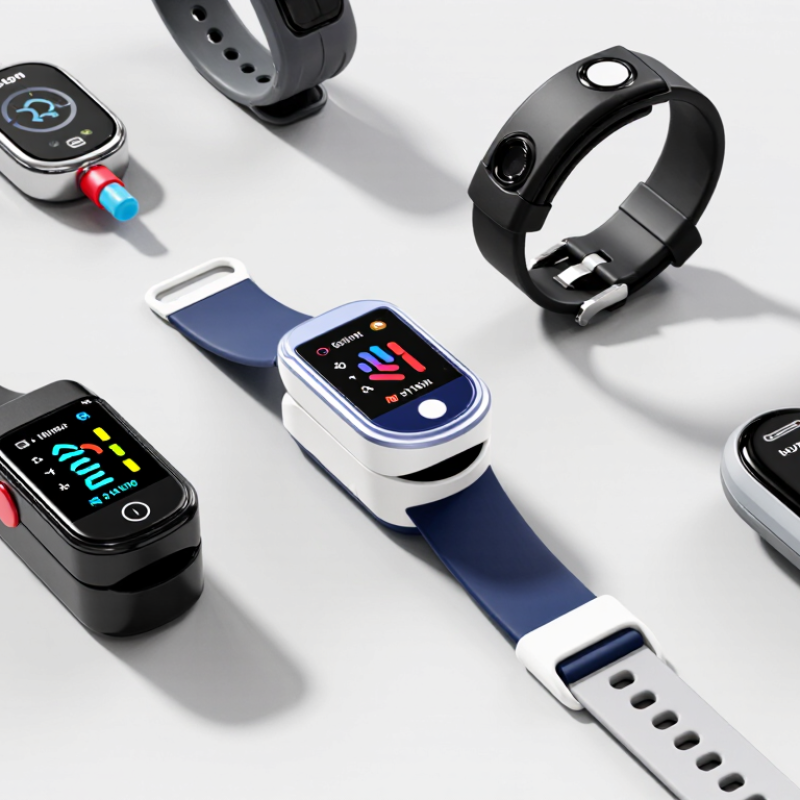
For 2026 wholesale planning, blood oxygen SpO2 trackers should explain the normal range clearly. In most healthy adults at sea level, SpO2 commonly measures between 95% and 100%. This percentage shows how much oxygen red blood cells carry. It is useful information, but not a complete health assessment.
A reading below 95% may deserve attention, especially when it repeats during rest. However, altitude, cold fingers, movement, loose fit, and poor sensor contact can affect results. Dark nail products may also interfere with some optical sensors. Ask users to sit quietly, warm their hands, and keep the tracker secure. One reading can mislead.
For wholesale buyers, accuracy claims should be supported by transparent testing details. Look for consistent results across different skin tones, wrist sizes, and activity levels. Sleep readings should be treated as trends, not medical conclusions. A tracker may show 93% after vigorous exercise, then return to 98% within minutes. That change can be normal. Persistent low readings, breathing difficulty, chest discomfort, or unusual fatigue require professional medical advice. Fitness devices are not substitutes for clinical instruments. This point is easy to overlook. Even reliable hardware has limits, and product training should say so plainly.
2026 Top Blood Oxygen SpO2 Fitness Trackers for Wholesale
Sensor accuracy deserves more attention than display brightness or strap design. For wholesale buyers, ISO 80601-2-61 testing offers a useful technical reference. It evaluates pulse oximeter performance across the 70–100% SpO2 range. A credible report should identify the test method, reference equipment, sample size, and measured error. Vague claims are not enough. Numbers can mislead.
Testing should include controlled oxygen levels, different pulse rates, and varied skin conditions. Motion and low peripheral perfusion also deserve attention, although every laboratory setup has limits. A tracker may perform well on a resting volunteer, then respond slowly during a cold outdoor workout. That difference matters. Ask suppliers whether testing covered the complete range, rather than only normal readings near 98%.
Wholesale teams should review bias, precision, repeatability, and the percentage of readings within the stated tolerance. They should also check whether the product was tested as a wearable tracker or as medical-grade equipment. ISO-related testing does not automatically make a consumer device suitable for diagnosis. This distinction should appear clearly in product documents and sales materials.
My practical concern is consistency. One sample may pass while another performs less reliably after assembly changes. Request recent batch data, independent laboratory records, and clear instructions for proper use. Users should remain still, keep the sensor fitted, and avoid interpreting one reading alone. No test perfectly represents daily life. That is where careful purchasing still requires judgment.
For wholesale buyers, format matters as much as the SpO2 sensor. IDC projected about 538 million wearable devices would ship worldwide in 2024, showing strong demand across price tiers. Wristbands remain practical for entry-level programs. They are light, simple, and easy to package with step counts, sleep data, and heart-rate readings. Their narrow screens can limit oxygen trend visibility, though.
Smartwatches offer the broadest retail story. Larger displays show overnight SpO2 graphs, alerts, and training metrics without a phone. They also support stronger battery, software, and service expectations. That raises procurement costs and return risks. A 2024 report from Counterpoint Research noted continued growth in the smartwatch market, but growth does not guarantee accurate oxygen readings. Tight wrist placement, movement, cold skin, and tattoos may affect results. Buyers should request validation details, sampling methods, and performance data across different users.
Smart rings are smaller and often more comfortable during sleep. Their discreet design suits wellness-focused customers and premium gift channels. Grand View Research has forecast rapid growth for the smart ring market through 2030, with a compound annual growth rate above 20 percent. However, rings can be harder to size, charge, and explain at retail. That is a real weakness. Wholesale teams should compare sensor placement, battery duration, sizing kits, app localization, and after-sales support—not just the lowest unit price. SpO2 trends can support wellness insights, but they should not replace clinical assessment.
2026 tracker formats compared: wristbands, smartwatches, and rings. The chart uses representative specification benchmarks commonly found in consumer fitness trackers. Actual battery life, weight, and SpO2 functionality vary by model and supplier.
Key takeaway: Smartwatches generally provide the broadest display and health-feature set, wristbands balance battery life with lightweight design, and rings offer the lowest weight with comparable multi-day battery performance.
A reliable SpO2 fitness tracker starts with honest hardware testing, not attractive packaging. IP68 protection helps resist dust and temporary water exposure. However, suppliers must confirm the tested depth and duration. IP68 is not identical across factories.
5 ATM offers stronger water resistance for swimming and daily movement. It does not automatically permit deep diving or high-pressure activities. Ask for laboratory reports, sealing procedures, and production consistency records. Small gaps around the charging contacts can cause serious returns. Not perfect.
Battery performance deserves practical testing. A tracker claiming seven days may last less with continuous SpO2 monitoring, bright screens, and frequent notifications. Wholesale buyers should test real usage for several days. Check charging time, battery cycle stability, and replacement availability. These details affect customer trust more than a large capacity figure.
Connectivity standards also shape the buying decision. Stable Bluetooth pairing should support common Android and iOS versions. The device should reconnect after walking away from the phone. Data transfer should remain consistent during workouts. Review firmware update methods and privacy controls before placing a large order. SpO2 readings can vary with motion, skin temperature, fit, and circulation. A clear user guide should explain these limits. I would still request sample units before approval, because specification sheets rarely reveal every production weakness.
For 2026 SpO2 fitness trackers, supplier evaluation should begin with transparent MOQ terms. A practical pilot range is 100–300 units, allowing buyers to test sensors, packaging, and return rates. Ask for tiered pricing at 500, 1,000, and 5,000 units. OEM services should include logo placement, strap colors, firmware language, packaging files, and app customization. Confirm whether engineering fees are refundable after mass production. Small details matter.
App security deserves equal attention. IBM’s Cost of a Data Breach Report 2024 placed the global average breach cost at 4.88 million US dollars. Suppliers should explain encryption in transit, account protection, cloud hosting, and deletion procedures. Request penetration-test summaries and update policies, not vague promises. NIST IoT guidance also emphasizes unique device identities and secure software updates. Does the supplier support these basics? Sometimes, no.
Warranty data should be measured by serial number and failure category. Request the last twelve months of return rates, battery complaints, screen failures, and sensor inaccuracies. A written 12-month warranty is useful, but replacement timing matters more. Ask whether defective units are repaired, credited, or replaced. FDA safety communication warns that pulse oximeter readings can be affected by skin pigmentation, circulation, temperature, and movement. Therefore, wholesale claims should avoid medical certainty. One weakness remains: supplier data may be incomplete. Independent sample testing is still necessary.
| Supplier Profile | Typical MOQ | Indicative Wholesale Lead Time | SpO2 Measurement Capability | OEM / ODM Services | Mobile App Security Evidence | Data Hosting & Privacy Controls | Warranty Terms | After-Sales Support | Evaluation Result |
|---|---|---|---|---|---|---|---|---|---|
| Profile A Large-scale OEM manufacturer |
1,000 units Lower MOQ may require a standard color and packaging. |
35–60 days for a new private-label order; repeat orders may be faster. | Wrist-based reflective SpO2 monitoring with periodic readings; accuracy must be validated against a reference pulse oximeter. | Advanced Custom logo, housing color, packaging, firmware interface, app branding, and API integration. |
Can provide encrypted data transfer documentation, account-access controls, software update records, and penetration-test summaries upon request. | Privacy policy and data-processing terms available; buyer should confirm hosting region, deletion procedure, and third-party analytics use. | 12–24 months Usually limited to manufacturing defects; battery and wear items may have shorter coverage. |
Dedicated project manager, replacement-rate reporting, spare parts, and remote troubleshooting. | Best for scalable private label |
| Profile B Mid-sized customization supplier |
300 units Custom packaging may have a separate minimum quantity. |
25–45 days for standard hardware with customized branding. | Continuous or spot-check SpO2 options may be available; readings are wellness-oriented unless the product has applicable regulatory clearance. | Good Logo printing, color selection, packaging artwork, app theme changes, and selected dashboard customization. |
Typically supports HTTPS/TLS data transmission and password-based accounts; request evidence for encryption at rest, secure development, and breach response. | Supplier should disclose whether cloud storage is optional and whether users can export or delete health-related records. | 12 months Replacement or repair normally subject to inspection and proof of purchase. |
Email and online support; response times should be written into the purchase agreement. | Balanced MOQ and customization |
| Profile C Catalog-based trading supplier |
50–100 units Usually limited to existing models and standard packaging. |
7–20 days when inventory is available; production replenishment may take longer. | Basic wrist-based SpO2 tracking with app display; performance can vary by skin contact, motion, fit, and ambient conditions. | Limited Logo label, standard box insert, and simple packaging changes; little or no firmware customization. |
Security information may be limited to app-store disclosures and privacy-policy pages; buyer should conduct an independent app and permission review. | Cloud location, retention period, account deletion, and cross-border transfer terms may require written confirmation. | 6–12 months Often excludes accidental damage, charging accessories, and normal battery degradation. |
General sales support with limited engineering access and replacement stock dependent on availability. | Best for low-volume testing |
| Profile D Enterprise wearable platform supplier |
500 units Higher setup fees may apply for dashboards, APIs, and account management. |
45–90 days for integration, compliance review, and customized deployment. | SpO2 data collection with configurable sampling and user dashboards; suitability for medical use requires separate regulatory verification. | Enterprise-grade Branded hardware, dedicated app environment, administrative portal, API, SDK, and data-export configuration. |
More likely to support role-based access, audit logs, TLS, encryption at rest, vulnerability handling, and documented software-release procedures. | May support regional hosting, data-processing agreements, retention controls, user consent flows, and account deletion workflows. | 24 months May include advance replacement, repair logistics, and service-level commitments. |
Technical account manager, integration support, firmware maintenance, and formal incident escalation. | Best for enterprise deployment |
| Profile E Startup-focused OEM partner |
200 units Flexible for pilot programs but pricing may be higher at low volume. |
30–55 days, depending on component availability and app changes. | Standard optical SpO2 sensor with periodic readings; buyer should request sample testing across different skin tones and activity conditions. | Flexible Rapid logo, packaging, onboarding, and app-interface adjustments; deeper hardware changes may require engineering fees. |
Security maturity can vary; require a current privacy policy, permission list, encryption statement, vulnerability-contact channel, and software-update commitment. | Clarify whether the app works without an account, where data is stored, how long it is retained, and how users request deletion. | 12 months Terms should define replacement timelines and treatment of defective batches. |
Direct founder or engineering contact may enable fast iteration, but long-term support capacity should be verified. | Best for pilot projects |
| Profile F Private-label distributor with ready stock |
20–50 units Suitable for market testing and small wholesale orders. |
3–14 days for available inventory; customization is generally minimal. | Preconfigured wearable SpO2 tracking; product specifications and test methods should be checked before listing performance claims. | Basic Logo stickers, inserts, and outer-box branding may be available; no substantial app or firmware changes. |
Security documentation may be limited; review the app publisher, permissions, update history, login options, and privacy disclosures before purchase. | Data practices are often controlled by the original app operator; obtain written clarification before collecting customer data at scale. | 6 months Usually replacement-based and subject to inventory availability. |
Standard ticket support with limited technical customization. | Best for market validation |
Normal readings near 98% do not tell the whole story. Testing should cover controlled oxygen levels across the complete range. Low readings may reveal slower responses or larger errors. Numbers alone can still mislead.
Look for the test method, reference equipment, sample size, and measured error. The report should explain bias, precision, and repeatability. It should also show how many readings met the stated tolerance. Vague claims deserve more questions.
Testing should include different pulse rates and skin conditions. Motion, cold hands, and weak circulation can affect performance. A resting volunteer is only one example. Outdoor workouts may produce different results.
No. ISO-related testing does not automatically support diagnosis. A consumer tracker may only provide wellness information. Sales documents should state this distinction clearly. One reading is not enough.
Request recent batch data and independent laboratory records. Ask whether assembly changes affected sensor performance. Test multiple samples, not only one attractive unit. One sample can pass.
A pilot of 100–300 units can reveal sensor and packaging issues. Measure return rates, battery complaints, and user feedback. Request prices for 500, 1,000, and 5,000 units. Small trials still have limits.
Confirm logo placement, strap colors, firmware languages, and packaging files. Ask whether the application can be customized. Clarify engineering fees before approving production. Refund terms may be unclear.
Ask about encryption during transfer, account protection, cloud hosting, and data deletion. Request penetration-test summaries and software update policies. Each device should have a unique identity. Promises are not evidence.
Request twelve months of failure data by serial number and category. Check battery failures, screen problems, and sensor inaccuracies. Ask whether defective units are repaired, credited, or replaced. Replacement timing matters greatly.
Users should remain still and keep the sensor fitted correctly. Cold skin, movement, circulation, and skin pigmentation may affect readings. No laboratory test perfectly represents daily life. Careful purchasing still needs judgment.
The 2026 wholesale market for Blood Oxygen SpO2 Fitness Tracker devices is shaped by reliable oxygen monitoring, practical designs, and scalable supplier support. Normal blood oxygen saturation is generally discussed within the 95–100% range, while sensor quality should be assessed through structured testing across the 70–100% SpO2 range, including methods aligned with ISO 80601-2-61 principles. Buyers can compare wristbands, smartwatches, and rings according to comfort, display functions, data access, and intended user needs.
A complete wholesale scorecard should review IP68 protection, 5 ATM water resistance, battery endurance, Bluetooth or other connectivity standards, and app compatibility. Supplier evaluation is equally important: confirm MOQ flexibility, OEM development services, data and app security practices, warranty terms, quality-control documentation, and after-sales responsiveness. By balancing measurement performance, product durability, software reliability, and commercial support, distributors can select fitness trackers that offer consistent value for different markets and customer groups.