Choosing an Atrial Fibrillation Monitoring Watch is not simply a matter of screen brightness, battery life, or brand reputation. It involves clinical evidence, sensor accuracy, data privacy, and realistic daily use. A watch may detect an irregular rhythm while you are walking, working, or sleeping. It cannot replace a medical diagnosis.
The World Health Organization identifies atrial fibrillation as the most common sustained cardiac arrhythmia. The Global Burden of Disease Study estimated that more than 37 million people were living with AF worldwide in 2017, with numbers expected to rise. Evidence from wearable research is encouraging. In the Apple Heart Study, published in the New England Journal of Medicine in 2019, 0.52% of participants received an irregular pulse notification. Among participants who returned an ECG patch, the notification’s positive predictive value was 84%. The Fitbit Heart Study, published in Circulation in 2022, reported a 98.2% positive predictive value for returned ECG readings after irregular rhythm notifications.
Dr. Mintu Turakhia, a cardiologist and Apple Heart Study investigator, said, “This study demonstrates the potential of wearable technology to help identify people with AFib.” That potential matters. Still, it has limits. False alerts happen. Some watches lack continuous ECG recording. Others require careful wrist contact and a compatible phone. This guide compares leading models through an evidence-based lens, including ECG capability, irregular-rhythm alerts, comfort, battery performance, and follow-up options. A watch can offer an important signal. It should never offer false reassurance.
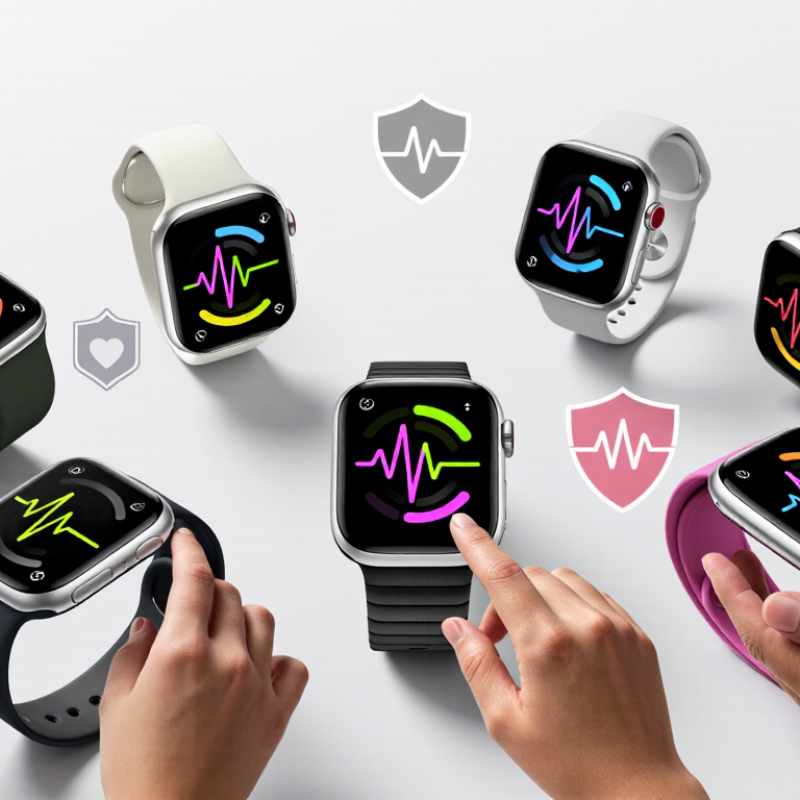
Atrial fibrillation monitoring watches usually detect rhythm changes, not every heart problem. Optical sensors track pulse patterns through the wrist. When intervals become irregular, the watch may flag possible atrial fibrillation. Some models also record a single-lead electrocardiogram, showing electrical activity during a short recording.
The distinction matters. A 2019 study involving 419,297 participants found that 0.52% received an irregular-rhythm notification. Among those who completed follow-up, 84% had atrial fibrillation confirmed by an electrocardiogram patch. This result is useful, but it does not prove that every alert is accurate. Motion, loose contact, exercise, and occasional extra beats can confuse the sensor.
The 2023 ACC/AHA/ACCP/HRS guideline supports clinician-reviewed ECG recordings from consumer devices when confirming atrial fibrillation. A watch can record clues. It cannot reliably rule out short or silent episodes. It also does not measure stroke risk, blood clots, or blocked arteries. The screen may show a neat rhythm strip, yet clinical context remains essential. A symptom diary, pulse check, and medical-grade ECG can reveal a different story. That uncertainty deserves attention. Before purchasing, check whether the device stores ECG files, timestamps symptoms, and allows secure sharing with a healthcare professional. These practical details may matter more than a polished health score.
Wearable watches monitor heart rhythm through optical sensors placed beneath the case. These sensors shine light into the skin and measure tiny blood-volume changes. This method is called photoplethysmography, or PPG. During an irregular rhythm, the pulse pattern may appear uneven, rapid, or unpredictable.
Some watches also provide a single-lead electrocardiogram, known as an ECG. The user touches the watch or its frame with one finger. The device records electrical signals for about 30 seconds. Software then checks the tracing for patterns linked with atrial fibrillation. A notification may suggest an irregular rhythm, but it cannot confirm a diagnosis.
Fit matters more than many shoppers expect. A loose strap, wet skin, exercise, or cold fingers can distort readings. Hair and frequent wrist movement may also create gaps. I have found that repeated measurements under calm conditions are easier to interpret. Still, personal testing is imperfect. The watch may miss brief episodes or flag harmless irregularities.
Look for clear ECG recording, adjustable alerts, and downloadable reports. A reliable device should explain its limits in plain language. Medical review remains important, especially after repeated alerts, dizziness, chest discomfort, or fainting. Keep the wrist still during readings. Record the time and symptoms, since those details help a clinician assess the result.
When comparing atrial fibrillation monitoring watches, examine how they collect heart data. A watch with an electrocardiogram feature can record a short rhythm strip when you feel palpitations. Photoplethysmography sensors may track irregular patterns throughout the day. However, continuous tracking does not always mean clinical accuracy. Look for clear information about testing, regulatory clearance, and recording quality. Avoid vague claims.
Battery life affects real-world monitoring. Frequent charging creates gaps, especially during sleep. A practical device should last several days and recharge quickly. Water resistance also matters for exercise and daily washing. Comfort matters more than expected. A tight strap can irritate skin, while a loose fit may weaken sensor readings. Small details count.
Check whether the watch stores readings securely and allows simple data sharing with a qualified healthcare professional. Exportable reports can show timing, duration, and possible triggers. Privacy policies deserve careful reading. Yet no watch can confirm atrial fibrillation alone. False alerts happen. Missed events happen, too. I would treat alerts as prompts for medical advice, not final answers. Seek urgent care for chest pain, severe breathlessness, fainting, or sudden weakness. The best choice balances dependable sensing, comfortable wear, understandable reports, and honest limitations. That balance is easy to overlook.
Choosing the best atrial fibrillation monitoring watch depends on the use case, not the brightest screen. For occasional screening, choose a watch with a regulatory-cleared single-lead ECG and irregular-rhythm alerts. The 2024 ESC Guidelines state that wearable-detected AF still needs clinical confirmation. A watch can flag an episode. It cannot explain every skipped beat.
The American Heart Association’s 2024 Statistical Update projects that 12.1 million US adults may have AF by 2030. For sleep tracking, prioritize comfort, stable overnight wear, and automatic pulse recording. For exercise, choose fast readings and clear activity context. Motion can create noisy signals. For medication discussions, exportable reports help, but they should not replace symptom notes or clinical review. In my experience, the best device is often the one people remember to charge. This sounds obvious. It is also where many comparisons fail. Battery life, skin contact, and phone compatibility affect real-world performance.
Tips: Record the alert time, symptoms, activity, and caffeine intake. Sit still, warm your hand, and repeat the ECG when possible. Seek urgent care for fainting, severe chest pain, or serious breathing difficulty. Review recurring alerts with a qualified clinician. Never change medication from a watch notification alone. Independent validation may use different populations and conditions. A perfect-looking reading can still be wrong.
This chart compares common smartwatch monitoring capabilities for different atrial fibrillation use cases. A value of 1 means the capability is typically available in that use case, while 0 means it is not typically used.
Optical pulse sensing, also called PPG, supports passive and overnight rhythm screening. Single-lead ECG is generally used for short, user-initiated recordings when symptoms occur or an irregular rhythm requires confirmation. These consumer monitoring features do not replace clinical diagnosis.
Top Atrial Fibrillation Monitoring Watches to Buy
Accuracy depends on the sensor, software, and your skin contact. Most watches use optical pulse sensing, while some offer single-lead electrocardiograms. Optical detection can flag irregular rhythms, but it cannot confirm every episode. Motion is a problem. Loose straps, tattoos, cold fingers, and frequent premature beats may create confusing readings.
A 2019 New England Journal of Medicine study included 419,297 participants. Only 0.52% received an irregular rhythm notification, and 84% of evaluated notifications matched atrial fibrillation on a follow-up electrocardiogram. That result is encouraging, not definitive. A 2022 Circulation study involving 455,699 participants reported a 98.2% positive predictive value for a similar notification system, but participants were not a perfect sample of everyday users. Performance may vary in older adults and people with other heart conditions.
Use a watch to collect evidence, not to self-prescribe treatment. Record the time, heart rate, symptoms, and activity when an alert appears. Then share the recording with a qualified clinician. A watch may miss short episodes, especially during exercise or poor contact. It may also produce false alarms. I would not call any watch perfect. If palpitations continue, or dizziness, fainting, chest pressure, or breathing difficulty occurs, seek urgent medical care rather than waiting for another reading. Anti-clotting medicine and rhythm treatment require clinical assessment, even when the watch appears convincing.
| Watch Monitoring Type | Primary Technology | What It Can Detect | Typical Evidence-Based Performance | Main Limitations | Best Use Case | Safe Usage Considerations |
|---|---|---|---|---|---|---|
| Wrist PPG with irregular-rhythm alerts | Optical photoplethysmography using green or infrared light | Pulse irregularity patterns that may be consistent with atrial fibrillation | Large validation studies commonly report sensitivity and specificity in the mid-to-high 90% range under study conditions; real-world performance is variable | Cannot directly display the heart’s electrical rhythm; motion, loose fit, skin conditions, tattoos, low circulation, and premature beats may cause false alerts or missed events | Passive, long-term screening for people with intermittent or asymptomatic episodes | Treat an alert as a prompt for confirmation with medical-grade ECG testing, not as a diagnosis |
| On-demand single-lead ECG watch | Electrical recording between the wrist and a finger contact | A short rhythm strip that may identify atrial fibrillation, normal sinus rhythm, or an inconclusive result | Validated single-lead systems often show approximately 95% or higher sensitivity and specificity for AF classification when a good-quality tracing is obtained | Usually records only when activated; may produce inconclusive readings; does not provide a full 12-lead ECG or reliably identify every cardiac condition | Checking symptoms, documenting an episode, and sharing a rhythm strip with a clinician | Remain still, maintain firm skin contact, and repeat poor-quality recordings; seek clinical interpretation for new or repeated abnormal results |
| Continuous PPG plus occasional ECG | Continuous optical pulse monitoring with user-initiated electrical recordings | Long-term irregular pulse patterns and confirmatory rhythm strips during symptoms | Combines broad screening coverage with generally stronger confirmation than PPG alone; performance depends on recording quality and algorithm design | Battery life may be reduced by continuous monitoring; PPG alerts can still be nonspecific; ECG is not continuously recorded | Users who want passive screening plus the ability to capture an episode when symptoms occur | Enable notifications only if they are useful; avoid repeatedly checking the watch in a way that increases anxiety |
| Heart-rate trend watch without AF classification | Optical heart-rate sensing and resting-heart-rate trends | Changes in pulse rate or activity-related heart-rate patterns, but not AF specifically | Useful for general trend monitoring; heart-rate accuracy is typically better during rest than during vigorous movement | A high, low, or irregular displayed rate does not establish AF and may reflect exercise, stress, fever, dehydration, or sensor error | General wellness tracking when AF-specific features are unavailable | Do not use heart-rate trends to adjust medication or replace prescribed monitoring |
| Watch paired with a clinical ECG patch | Consumer watch for symptom logging plus adhesive ambulatory ECG recorder | Intermittent or continuous electrical rhythm data reviewed through a clinical monitoring service | Clinical ECG monitoring is generally more appropriate for diagnosis and episode quantification than wrist-based screening | Requires clinician involvement; adhesive irritation, recording gaps, and limited wear duration may occur | Evaluating unexplained palpitations, suspected intermittent AF, or symptoms despite normal watch readings | Follow the prescribed wear schedule and report symptoms even if the watch shows a normal result |
| Watch with clinician-reviewed ECG export | Single-lead ECG recording that can be saved or shared as a report | A documented rhythm strip suitable for review alongside symptoms and medical history | Interpretation by a qualified clinician is more reliable than relying solely on an automated label | A single-lead tracing may miss other abnormalities, and automated classifications can be wrong or unavailable during noise | Supporting medical consultations with time-stamped rhythm evidence | Protect personal health data when exporting or sharing recordings; keep the original timestamp and symptoms noted |
Optical sensors shine light into the skin. They measure tiny blood-volume changes, called photoplethysmography, or PPG. Uneven pulse patterns may suggest an irregular rhythm. It is useful, but imperfect.
A single-lead ECG records electrical signals for about 30 seconds. You usually touch the watch or its frame with one finger. Software may identify patterns linked with atrial fibrillation. It cannot confirm a diagnosis.
No watch detects every event. Brief episodes may be missed. Harmless changes may trigger alerts. Treat notifications as prompts for medical advice, not final answers.
Wear the strap snugly, without excessive pressure. Keep your wrist still during readings. Calm, dry skin usually helps. Wet skin, cold fingers, hair, movement, and a loose strap can distort results.
Look for clear ECG recordings and adjustable alerts. Downloadable reports can show timing and duration. Choose understandable explanations, not vague promises. I might overlook comfort when comparing specifications.
Several days of battery life can reduce monitoring gaps. Quick charging is practical, especially overnight. Water resistance helps with exercise and daily washing. Still, water resistance does not guarantee perfect sensor readings.
Check how readings are stored and shared. Simple export options can help a qualified healthcare professional review results. Read the privacy policy carefully. Secure storage matters.
Seek medical advice after repeated alerts, dizziness, chest discomfort, or fainting. Seek urgent care for chest pain, severe breathlessness, fainting, or sudden weakness. Record the time and symptoms. Those small details can matter.
An Atrial Fibrillation Monitoring Watch is designed to help identify irregular heart rhythms that may be associated with atrial fibrillation, a condition in which the heart beats unpredictably. Using optical sensors, electrical signals, or both, these watches track pulse patterns and may provide alerts when an unusual rhythm is detected. When comparing options, consider monitoring methods, signal quality, comfort, battery life, data sharing, app usability, water resistance, and whether the device supports scheduled or on-demand checks.
Different watches may suit different needs, including occasional wellness tracking, frequent rhythm checks, or support for people already discussing symptoms with a healthcare professional. However, wearable readings are not a diagnosis and may be affected by movement, loose fit, skin contact, or other sources of signal noise. Users should follow setup instructions, keep the watch properly fitted, and treat alerts as prompts for professional evaluation rather than proof of a medical condition. Seek urgent medical care for severe symptoms such as chest pain, fainting, or serious breathing difficulty.