Direct-from-factory OEM/ODM health monitoring wearables tested for EU CE compliance, Bluetooth 5.1/5.3 stability, continuous pulse oximetry, and multi-lead ECG precision.
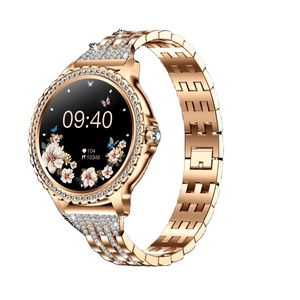
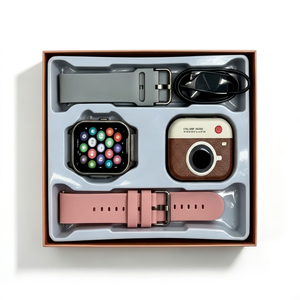
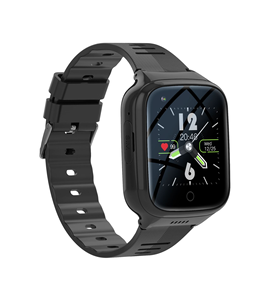
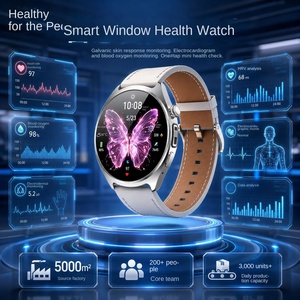
A comprehensive technical analysis for B2B procurement directors, OEM brand managers, and medical device importers operating within the European Economic Area (EEA).
For smart health monitors incorporating Bluetooth Low Energy (BLE 5.0/5.1/5.3), 4G LTE-M, or Wi-Fi connectivity, compliance with the Radio Equipment Directive (RED) is mandatory. Factory testing protocols must verify precise RF transmit power, spurious emissions, SAR (Specific Absorption Rate) safety boundaries, and immunity against external electromagnetic fields to prevent sensor signal distortion during daily operation.
Differentiating between wellness tracking devices and Class IIa medical smartwatches is vital for EU market authorization. While general wellness wearables measure physiological trends (e.g., optical PPG heart rate variations, estimated SpO2, and sleep cycles), diagnostic-grade monitors incorporating single-lead ECG wave analysis or micro-air-pump oscillometric blood pressure measurements require rigorous clinical validation data, EU Notified Body oversight, and technical documentation auditing.
Procuring smart health monitors directly from ISO 13485-certified manufacturing facilities ensures that every component—from the PCBA surface-mount technology (SMT) down to the bottom casing skin-contact materials—adheres to strict European standards. Silicon wristbands and metallic bezel finishes undergo rigorous ISO 10993 cytotoxicity, sensitization, and intracutaneous reactivity testing to guarantee 100% hypoallergenic wear for elderly users and sensitive skins.
Furthermore, CE compliance demands complete compliance with RoHS (2011/65/EU) and REACH (EC 1907/2006) regulations, prohibiting hazardous substances such as lead, cadmium, polybrominated biphenyls, and phthalates. OEM brand owners benefit from fully documented supply chain traceability, component-level certificates of analysis (CoA), and factory batch audit reports ready for customs clearance and regulatory inspection.
Understanding the hardware physics, optical wavelengths, and signal-to-noise ratio (SNR) enhancements that separate high-grade health monitors from budget consumer trackers.
| Monitoring Parameter | Sensor Technology Implemented | Wavelength / Hardware Specs | Clinical Accuracy / Deviation Target | Primary Industrial / OEM Use Case |
|---|---|---|---|---|
| Blood Pressure Trends (PPG) | Dual-Wavelength Optical Photoplethysmography | Green (525nm) + Infrared (940nm) | ±5.8 mmHg vs Standard Cuff Calibration | 24/7 Ambulatory BP Trend Tracking & Alerts |
| Micro-Air-Pump Oscillometric BP | Miniaturized Piezoelectric Air Pump & Cuff | Physical Wrist Air Bag Pressurization | ±3.0 mmHg (ISO 81060-2 Standard) | Medical-Grade Spot Checking & Hypertension Mgmt |
| Single-Lead ECG Rhythm | Titanium-Coated Dry Electrode Electrodes | High-Differential Low-Noise Analog Front-End | 98.2% Sensitivity vs 12-Lead Holter ECG | Arrhythmia Detection, AFib & HRV Stress Analysis |
| Blood Oxygen Saturation (SpO2) | Reflectance Pulse Oximetry Array | Red (660nm) + Far-Infrared (910nm) | ±2.0% within 70%–100% SpO2 Range | Sleep Apnea Screening & Respiratory Wellness |
| Continuous Body Temperature | NTC Medical Thermistor + Skin Contact Sensor | Direct Contact Conduction Chipset | ±0.1°C High-Precision Sensitivity | Fever Alarm & Infection Early Warning Systems |
Motion artifacts represent the largest obstacle to optical health tracking. Our factory software stack integrates 6-axis motion sensors (accelerometer + gyroscope) with adaptive Kalman filtering, real-time baseline drift cancellation, and dynamic optical gain control to isolate cardiac micro-pulses even during intensive physical activity.
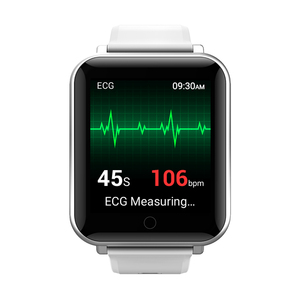
Using ultra-low-noise Analog Front-End (AFE) ICs with common-mode rejection ratios (CMRR) exceeding 100dB, our smartwatches extract clean P-Q-R-S-T ECG waveforms. Raw ECG data can be transmitted in real-time via SDK/API integrations directly into telehealth mobile apps and hospital cloud platforms.
Combining simultaneous heart rate variability (HRV), skin temperature, nocturnal respiration rate, and SpO2 enables onboard AI microcontrollers to calculate comprehensive daily recovery scores, sleep stage breakdowns (Deep, Light, REM), and stress indexes without consuming excessive power.
Market intelligence and technological roadmaps for brand managers preparing product lines for the next decade of digital healthcare integration.
The global wearable market is rapidly shifting toward non-invasive metabolic insights. By leveraging multi-wavelength optical bio-impedance and infrared spectroscopic monitoring, next-generation smartwatches allow users to track relative glucose fluctuations post-meals without needle pricks, offering valuable lifestyle feedback for pre-diabetic and wellness-focused demographics.
B2B procurement is moving away from closed consumer ecosystems toward open-architecture hardware. Enterprise health platforms demand custom iOS/Android SDKs, Bluetooth GATT profile access, and RESTful API cloud integration to feed raw biometric streams directly into hospital Electronic Health Records (EHR) and senior care monitoring dashboards.
With an aging global population, demand for senior care wearables has skyrocketed. Key procurement features include automatic fall detection utilizing 3D spatial velocity vector analysis, one-touch panic SOS buttons, cellular 4G voice calling independence, and family cloud account sync with zero monthly subscription fees.
From initial ID design and tooling to PCB SMT assembly, firmware customization, and international compliance documentation.
High-speed Yamaha SMT production lines capable of 0201 component placement. Class 100,000 dust-free cleanrooms ensure lens optical clarity and zero dust contamination during display bonding.
Every unit undergoes 100% automated optical inspection (AOI), water-pressure chamber testing (IP67/IP68/3ATM), high-temperature aging chambers (48 hours), and drop-impact simulation before packaging.
Comprehensive OEM services including custom boot logos, branded dial watch faces, localized packaging artwork, multilingual user manuals, and customized mobile app white-labeling.
Streamlined export processing with pre-issued CE, FCC, RoHS, and MSDS battery transportation certificates. Fast sample dispatch within 3 business days and reliable batch delivery lead times.
Direct answers regarding MOQ, CE regulatory validation, OEM branding, software SDK access, and factory warranty commitments.
We provide complete CE test reports issued by accredited EU Notified Bodies and recognized testing laboratories (covering RED Directive 2014/53/EU, LVD electrical safety EN 62368-1, and EMC EN 301 489). Official Certificate of Conformity (DoC) documents with full factory registration numbers are included with all commercial sample shipments.
Standard neutral factory models can be ordered starting at 50 to 100 units for market sampling. Laser-etched logo customization and custom box packaging begin at an MOQ of 500 units. Deep OEM customization (custom mold tooling, custom PCB layout, or proprietary firmware features) starts at 1,000–3,000 units depending on hardware scope.
Yes. We support software developers and telehealth platforms by offering native iOS (Swift/Objective-C) and Android (Java/Kotlin) Bluetooth SDKs. This allows full access to real-time PPG data, raw ECG waveform vectors, blood oxygen logs, step counts, and battery status directly into your proprietary healthcare infrastructure.
Optical PPG smartwatches track relative blood pressure trends and physiological fluctuations for continuous daily awareness, serving as early indicator devices. For precise diagnostic spot-checking, we recommend our specialized micro-air-pump oscillometric cuff smartwatches, which physically inflate on the wrist to achieve high compliance with ISO 81060-2 clinical standards.
Our factory operates under ISO 13485 and ISO 9001 quality management systems. We execute AQL 0.65 for critical defects and AQL 1.0 for major defects. Quality checks include IQC (Incoming Quality Control for screen panels and sensor ICs), IPQC (In-Process Quality Control during SMT), and FQC (Final Quality Control for 100% water sealing and battery cycle testing).
All CE-certified smart health monitors come standard with a 12-month hardware warranty. For commercial procurement clients, we provide spare unit allowances (typically 0.5% to 1% extra units with mass shipments) or fast RMA repair support to ensure seamless customer service in your local market.
Accelerate your brand's market entry with fully compliant, high-precision health monitoring wearables. Request catalog pricing, CE technical documentation, or sample evaluation units today.