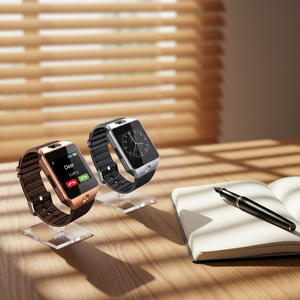
As a premier Chinese bulk smartwatch manufacturer and global exporter, our state-of-the-art electronics assembly facilities bridge the gap between complex micro-circuit engineering and market-ready enterprise solutions. In an era governed by algorithmic health tracking, ultra-low-power MCU architectures, and multi-sensor optical arrays, global brands require more than basic white-label assembly—they require end-to-end industrial architecture, strict regulatory compliance, and verified supply chain resilience.
Explore our core manufacturing line-up. Every device features custom ROM/RAM configurations, localized firmware language packages, customizable packaging, and high-yield SMT component integration.
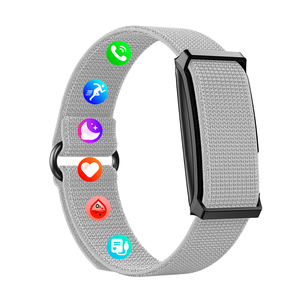
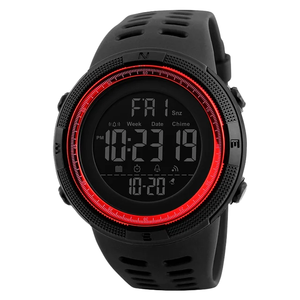
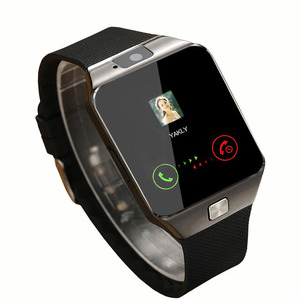
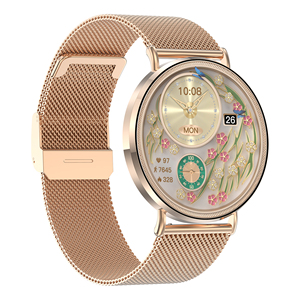
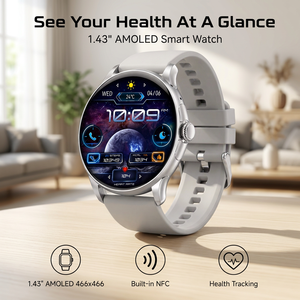
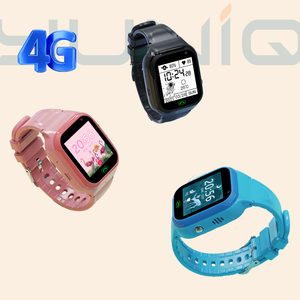
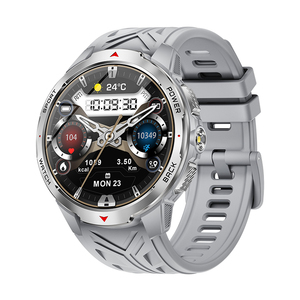
From initial board layout to final packaging line serialization, our operational workflow is designed to reduce total cost of ownership (TCO) while ensuring complete technical reliability.
We maintain direct strategic partnerships with Tier-1 chip vendors (Nordic Semiconductor, Realtek, Jerry, Dialog) and LCD/AMOLED panel foundries. This eliminates intermediary markups, ensures component longevity, and guarantees component availability even during global semiconductor disruptions.
Every batch undergoes exhaustive reliability testing: 10,000-cycle button press tests, 48-hour thermal shock cycling (-20°C to +60°C), saltwater corrosion spray tests, and certified IP67/IP68/3ATM pressure chamber immersion to eliminate field returns.
We provide complete software development kits (SDKs) and open APIs for Android and iOS app customization. Our firmware team facilitates custom Bluetooth UUIDs, cloud server data routing, branded boot logos, and custom UI skin integration within tight project sprint deadlines.
Understanding next-generation biosensors, power management frameworks, and material engineering is essential for B2B buyers seeking multi-year product viability.
Traditional single-green-LED photoplethysmography (PPG) is rapidly giving way to multi-spectral optical clusters combining green, red, infrared, and yellow light wavelengths. This enables highly accurate non-invasive tracking of blood oxygen saturation (SpO2), single-lead electrocardiogram (ECG) waveform synthesis, arterial stiffness indices, and continuous skin temperature monitoring.
Our latest hardware architectures incorporate dual-channel PPG chips paired with low-noise analog front-ends (AFE), yielding a signal-to-noise ratio (SNR) that approaches clinical diagnostic thresholds—providing enormous competitive advantages for health-focused consumer brands.
Energy density remain the primary bottleneck in user adoption. Next-generation smartwatches leverage dual-core RISC-V and ARM Cortex-M33 microcontrollers capable of dynamic frequency scaling. When idle, processing cores draw micro-amps, activating high-performance GPUs only during touch interactions.
Paired with high-density pure-cobalt lithium polymer batteries and custom power management ICs (PMIC), modern sports and health smartwatches achieve 14 to 30 days of continuous battery life without sacrificing display brightness or continuous background sensor polling.
Cloud-dependent algorithm processing introduces latency, privacy risks, and heavy data transfer overheads. Future-ready wearables integrate tinyML neural network models directly into onboard flash memory.
Edge AI enables real-time arrhythmia detection, sleep architecture classification (light, deep, REM), stress analysis based on Heart Rate Variability (HRV), and automatic workout recognition without requiring active smartphone tethering or server round-trips.
While high-resolution 466x466 AMOLED panels remain the current gold standard for premium devices, MicroLED technology is entering high-tier production. MicroLED offers 5x light efficiency over OLED, reaching peak brightness levels above 2,000 nits for uncompromised outdoor visibility under direct sunlight.
Enclosure design has shifted toward high-strength lightweight materials: aerospace-grade aviation aluminum alloys, surgical-grade 316L stainless steel, and vacuum-plated sapphire glass coatings to withstand rigorous daily physical wear.
Global sourcing managers are overhauling vendor selection criteria to navigate evolving consumer expectations, stringent data privacy laws, and international trade dynamics.
| Procurement Pillar | Traditional Sourcing Model | Next-Gen Supply Chain Standard (2026+) | Strategic Enterprise Value |
|---|---|---|---|
| Software Architecture | Closed, rigid turnkey app with locked brand graphics | Open SDK/API access, localized cloud endpoints, custom UI/UX frameworks | Enables complete brand ownership and enterprise data integration |
| Quality Standards | Basic AQL 2.5 sample inspection post-assembly | ISO 13485 manufacturing lines, 100% automated optical inspection (AOI) | Dramatically minimizes field defect rates and costly RMA claims |
| Regulatory Compliance | Self-declared CE/FCC basic electrical testing | Full CE-MDR readiness, RoHS 3.0, REACH, UN38.3 battery transport compliance | Mitigates customs holds, legal liability, and platform delisting risks |
| Procurement Flexibility | High MOQs with standard static housing designs | Modular tooling, low-MOQ trial production runs, flexible CMF options | Accelerates time-to-market and lowers inventory holding risk |
| Sustainability & Materials | Standard PVC packaging and non-recyclable plastics | FSC-certified biodegradable packaging, bio-based TPU, eco-silicone straps | Aligns with global ESG corporate governance requirements |
Effective procurement starts with clear technical alignment on PCBA layout, antenna design (LDS vs. FPC), and enclosure IP sealing. Experienced importers partner with manufacturers offering in-house tooling creation, ultrasonic welding, automated dispensing, and multi-stage leak testing. By managing raw component lead times (especially for micro-display driver ICs and optical sensors) 12 to 16 weeks in advance, enterprise clients ensure stable rolling inventory without experiencing seasonal price surges.
Expert guidance addressing common OEM/ODM engineering, compliance, customization, and logistics inquiries.
Our standard Minimum Order Quantity (MOQ) for neutral factory stock (ready-to-ship standard packaging) starts as low as 100 to 500 units. For customized laser-engraved logos, custom silk-screened packaging, and custom Bluetooth pairing names, MOQ typically starts at 1,000 units. For full ODM projects requiring custom housing tooling, dedicated PCBA board spin-offs, and deep firmware modifications, MOQ is generally set at 3,000 to 5,000 units depending on component complexity.
Waterproofing is guaranteed through a multi-stage testing process. Every single watch housing undergoes 100% dry air-pressure leak testing using automated pneumatic sensors prior to final PCB assembly. Post-assembly, random statistical samples are subjected to wet pressure testing chambers simulating static water depth (up to 50 meters for 5ATM rated sport watches) and thermal immersion cycles to verify seal integrity around buttons, optical sensor windows, and microphone/speaker membranes.
Yes. Our dedicated software engineering team provides comprehensive SDKs, Bluetooth protocol documentation, and sample code repositories (iOS Swift / Android Java & Kotlin). We support custom data payload structuring, enabling direct encrypted device-to-cloud telemetry transmission without storing user metrics on intermediary third-party servers. We routinely assist clients in configuring custom AWS, Azure, or private server endpoints.
Our manufacturing facilities and products hold full compliance certifications required for global export into North America, Europe, Latin America, and Asia-Pacific. Standard certifications include CE-RED (EMC & LVD), FCC Part 15C, RoHS 3.0 (2015/863), REACH, and WEEE compliance. For lithium-ion battery transportation safety, all shipments are accompanied by valid UN38.3, MSDS, and air/sea freight cargo safety transport documentation.
Optical sensor accuracy relies on hardware-software co-design. We utilize multi-wavelength LED arrays paired with high-dynamic-range Analog Front Ends (AFE). Our firmware algorithms incorporate adaptive LED current control that automatically boosts optical emission power and adjusts gain amplification when detecting higher melanin levels or motion artifacts. Devices are calibrated against medical-grade reference monitors during validation testing.
Prototype samples for hardware evaluation and app integration testing are dispatched within 3 to 7 working days. Bulk mass production lead times generally range from 20 to 30 calendar days following sample approval and deposit receipt. For complex ODM orders requiring new injection mold fabrication, tooling setup adds approximately 25 to 35 days prior to pilot production.
We provide a standard 12-month factory warranty on all smartwatches and smart bracelets. To ensure seamless customer support for our global distribution partners, we offer two main RMA handling options: either supplying 1% free spare units (or key components like screens, straps, and chargers) with mass production shipments to cover local replacements, or replacing verified defective units in subsequent purchase orders.
Yes. Our standard global firmware package supports over 30 UI languages, including English, Spanish, French, German, Italian, Portuguese, Polish, Russian, Turkish, Arabic, Hebrew, Vietnamese, Thai, Japanese, Korean, and Simplified/Traditional Chinese. Font libraries are pre-rendered into system ROM for smooth, anti-aliased text rendering across all display resolutions.
Whether you are expanding an existing consumer electronics line, launching an enterprise digital health solution, or seeking a highly reliable Tier-1 B2B supply chain partner—our engineering team is ready to realize your specifications.
ISO9001:2015 | ISO13485 Medical Cleanroom | Direct Factory SMT Lines