China Wholesale Health Watch Manufacturing & OEM/ODM Supply Chain Whitepaper
The global wearable health monitoring industry has transitioned from rudimentary activity tracking to clinical-grade, continuous physiological metric monitoring. As the world’s undisputed epicenter of smart hardware manufacturing, China accounts for over 85% of global smartwatch R&D and assembly. Modern brand owners, medical device distributors, tele-health providers, and retail importers require deep technical transparency, rigorous quality management frameworks, and agile OEM/ODM customization capabilities to maintain a competitive advantage.
This whitepaper provides an authoritative overview of China's health watch manufacturing ecosystem, detailing biosensor micro-architectures, optical Photoplethysmography (PPG) algorithms, Electrocardiogram (ECG) hardware design, regulatory compliance benchmarks, and strategic procurement frameworks tailored for international enterprise buyers.
Information Gain Insight: Modern consumers and B2B buyers no longer evaluate health watches solely on battery life or screen aesthetics. Strategic procurement focuses on multi-modal biosensor integration, signal-to-noise ratio (SNR) in optical sensors, fall detection algorithm accuracy, and compliance with regional data privacy laws such as HIPAA and GDPR.
A high-performance commercial health watch relies on the seamless convergence of optoelectronic components, specialized integrated circuits (ICs), and real-time algorithmic signal processing. China’s leading manufacturers leverage top-tier semiconductor platforms (including Nordic Semiconductor nRF52840/nRF5340, Realtek RTL8763E, and Ambiq Micro Apollo series) to deliver low-power execution of complex algorithms.
Photoplethysmography (PPG) Array Modules: Utilizing multi-wavelength LED emitters (Green 525nm for superficial micro-vascular pulse rate; Red 660nm and Infrared 940nm for peripheral blood oxygen arterial saturation SpO2 estimation). Advanced optical sensors employ dynamic ambient light cancellation (ALC) algorithms to preserve signal integrity during intense physical motion or under direct sunlight.
Single-Lead & Multi-Lead Electrocardiogram (ECG): Integrated micro-electrodes (Titanium-coated or Stainless Steel 316L bezels/casebacks) coupled with dedicated analog front-end (AFE) chips capture continuous P-Q-R-S-T cardiac waveforms. Advanced DSP software filters electromyographic (EMG) noise to identify premature ventricular contractions (PVCs), sinus arrhythmia, and Atrial Fibrillation (AFib) risk indicators.
Miniature Air-Pump Oscillometric Blood Pressure Mechanisms: Transitioning beyond empirical optical estimation, cutting-edge OEM models integrate microscopic inflatable wrist cuffs driven by micro-solenoid valves. This micro-air pump technology delivers true oscillometric cuff-style blood pressure readings directly from the radial artery, drastically narrowing the margin of error to ±3mmHg.
6-Axis Inertial Measurement Units (IMU) for Fall Detection: High-precision accelerometers and gyroscopes constantly calculate kinetic trajectories. Machine learning models distinguish between normal daily movements, heavy exercise drop-impacts, and actual fall incidents, triggering automatic emergency SOS broadcasting via paired mobile devices or integrated 4G LTE eSIM modules.
2. Technical Specifications Comparison Matrix for B2B Importers
To assist procurement managers in evaluating tier-structured product lines, the table below outlines technical standards across key health watch categories offered by premier Chinese OEM factories:
Why Partner With China’s Leading OEM/ODM Manufacturers?
Navigating international trade requires a supplier capable of balancing rapid hardware iteration with uncompromised quality assurance and global compliance.
End-to-End OEM/ODM Integration
From industrial ID design, tooling construction, and SMT PCB placement to customized Android/iOS companion application development and cloud API integration, our turnkey services accelerate your market entrance.
ISO 13485 & Global Regulatory Compliance
Production lines operate under ISO 9001 and ISO 13485 Medical Device Quality Management Systems. Products carry CE, FCC, RoHS, REACH, and Telec certifications, alongside complete FDA clearance support documentation.
Rigorous AQL Quality Assurance
Every health watch unit undergoes strict quality control tests: 100% optical sensor calibration, 5-bar hydrostatic pressure testing, thermal shock endurance (-20°C to 60°C), micro-drop testing, and salt-fog corrosion testing.
Strategic Future Trends in Health Watch Procurement (2026–2030)
The global wearable technology roadmap is undergoing rapid evolution driven by miniaturization, artificial intelligence, and non-invasive biochemical sensing. Wholesale buyers, brand managers, and product strategists should align their procurement pipelines with these transformative trends:
On-Device Edge AI Algorithmic Inference: Future health smartwatches will increasingly execute machine learning models directly on microcontrollers (TinyML). This allows real-time anomaly detection—such as early warning signs of respiratory infections or cardiac rhythm distress—without relying on persistent cloud connectivity or draining battery reserves.
Multi-Parameter Continuous Biochemical Monitoring: R&D laboratories in Shenzhen and Dongguan are pioneering skin-surface sweat analysis and interstitial fluid spectroscopy modules. Upcoming OEM iterations aim to offer non-invasive continuous uric acid monitoring, lactate threshold tracking for athletes, and lipid profile estimations integrated into standard watch enclosures.
Energy Harvesting & Ultra-Low-Power Displays: The deployment of ambient solar charging layers embedded within Memory-in-Pixel (MIP) displays and thermoelectric energy generators (harvesting body heat differential) will extend operational battery autonomy from days to months, resolving a major consumer friction point.
Seamless Integration with Remote Patient Monitoring (RPM) Platforms: B2B health watch exporters are supplying open SDKs and RESTful APIs, enabling healthcare organizations and insurers to stream encrypted real-time patient telemetry directly into EHR/EMR platforms adhering to FHIR (Fast Healthcare Interoperability Resources) data standards.
Frequently Asked Sourcing & Technical Questions
Get clear answers to common questions regarding minimum order quantities, customization, firmware integration, and international shipping logistics.
What is the typical Minimum Order Quantity (MOQ) for OEM private-label health watches?
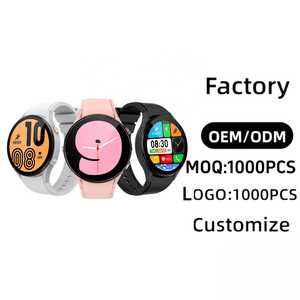
For neutral ready-to-ship wholesale stock, MOQs start as low as 50 to 100 units. For custom silk-screen logo printing, custom packaging, and tailored boot-up logos, the standard MOQ is typically 500 units. Deep OEM customization—including custom housing colorways, specialized strap materials, or customized firmware/APP localization—usually requires an MOQ of 1,000 to 3,000 units depending on the model's component complexity.
Are the blood pressure and ECG metrics provided by these smartwatches medically accurate?
Optical PPG blood pressure estimations and single-lead ECG recordings provide high-correlation trend monitoring intended for general wellness, fitness reference, and remote health awareness. They allow users to track daily variability and spot anomalies. For strict clinical diagnostic applications, our Air-Pump inflatable cuff models offer true oscillometric readings complying with standard sphygmomanometer tolerances. We recommend calibrating PPG models against a traditional upper-arm cuff for maximum relative consistency.
Do you supply Software Development Kits (SDKs) and API documentation for custom app integration?
Yes. We provide complete iOS and Android SDK documentation, Bluetooth communication protocol specs, and cloud server APIs for enterprise software teams. This enables direct raw data ingestion (heart rate intervals, PPG raw signals, step counts, sleep stages, SpO2 logs) into your proprietary mobile apps, corporate wellness portals, or hospital EHR infrastructure.
What regulatory certifications do your health watches hold for export to North America and Europe?
Our products undergo comprehensive international testing. European market exports comply with CE-RED (Radio Equipment Directive), RoHS 2.0 hazardous substance restrictions, and REACH chemical standards. North American shipments carry FCC ID certification for wireless transmission compliance and UN38.3 / MSDS documentation for safe lithium-polymer battery transit. Factory facilities hold ISO 13485 medical device quality certifications.
How do you handle product warranty, spare parts, and after-sales technical support?
All enterprise wholesale purchases include a standard 12-month factory warranty. For high-volume distributor contracts, we provide 1% to 2% spare units or key maintenance components (housings, straps, display assemblies, charging cables) free of charge. Our dedicated engineering support team offers 1-on-1 technical troubleshooting for firmware updates and software integration via web call or email.
What is the standard production lead time for bulk wholesale orders?
Sample evaluation orders ship within 1 to 3 business days. Neutral bulk orders (in-stock components) generally ship within 7 to 12 business days. Customized OEM orders requiring logo printing, custom packaging, and customized firmware builds typically take 20 to 25 calendar days following golden sample approval and deposit confirmation.
Empower Your Wearable Brand with a Trusted OEM/ODM Partner
Whether you are expanding an established consumer electronics brand, introducing senior-care telehealth devices, or curating a premium corporate wellness line, our manufacturing expertise delivers uncompromised quality, competitive factory-direct pricing, and reliable global delivery.