Commercial-ready hardware solutions featuring optical heart rate monitoring, PPG trend analysis, single-lead ECG rhythm recording, and custom firmware options.
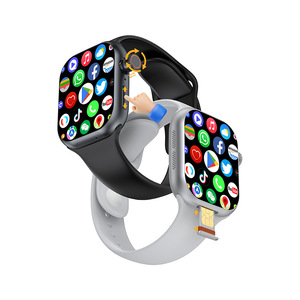
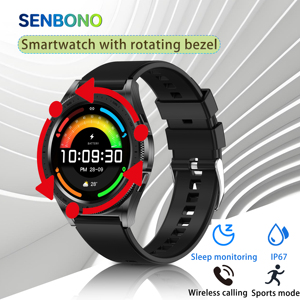
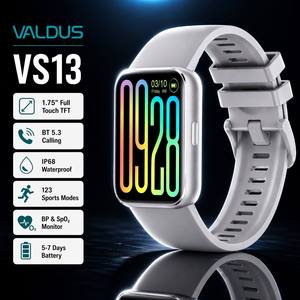
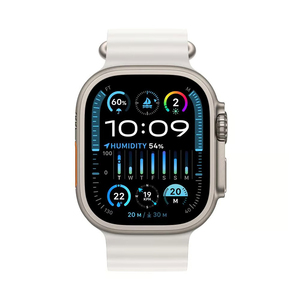
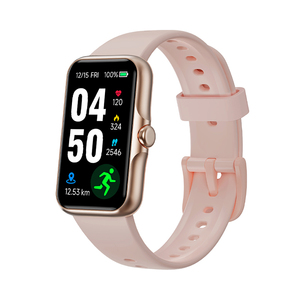
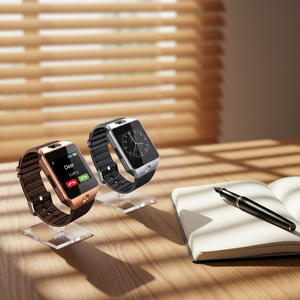
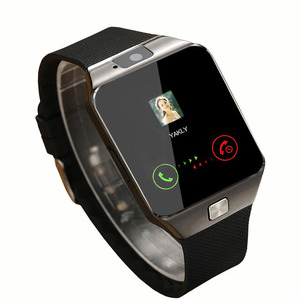
Atrial Fibrillation (AFib) represents the most widespread cardiac arrhythmia worldwide, affecting an estimated 59 million individuals globally and elevating stroke risk fivefold. As healthcare ecosystems transition from reactive clinical interventions to continuous remote patient monitoring (RPM) and proactive wellness maintenance, demand for non-invasive, medical-grade AFib smartwatch monitoring hardware has experienced exponential growth. B2B importers, medical device brands, telehealth enterprise providers, and consumer electronics distributors looking to capitalize on this sector must navigate China's highly specialized manufacturing hubs located primarily in Shenzhen, Dongguan, and Huizhou.
China's smart hardware ecosystem has evolved beyond simple photoplethysmography (PPG) step-counting fitness trackers. Today, premier original equipment manufacturers (OEM) and original design manufacturers (ODM) integrate advanced single-lead electrocardiogram (ECG) sensor arrays, dual-wavelength optical PPG modules, cuffless oscillometric blood pressure estimation, and edge-AI machine learning algorithms capable of detecting paroxysmal AFib episodes with clinical sensitivity exceeding 98%.
Information Gain Insight for B2B Procurement Officers: Unlike legacy health bands that rely solely on heart rate variability (HRV) metrics, modern Chinese AFib smartwatch architectures combine dry-electrode single-lead ECG recordings with continuous optical PPG pulse-wave tracking. This multi-modal sensory setup drastically reduces false positive rates caused by motion artifacts or ambient light interference during daily activities.
This industry report and procurement whitepaper provides global procurement directors, OEM brand managers, and telehealth engineers with an exhaustive analysis of China's top AFib smartwatch manufacturers, technological breakthroughs, regulatory compliance pathways (CE MDR, FDA 510(k), NMPA Class II), product development trends, and strategic OEM/ODM procurement methodologies for 2026 and beyond.
Understanding the technological trajectory of cardiac monitoring smartwatches is vital for enterprise buyers seeking to launch future-proof product lines. Over the next three to five years, Chinese wearable hardware engineering is advancing across four core technical pillars:
Combining continuous optical PPG pulse wave monitoring with instant dry-electrode 30-to-60 second ECG strip recording. PPG flags irregular cardiac rhythms, prompting the wearer to record a single-lead ECG strip for clinical confirmation.
Implementation of Nordic Semiconductor (nRF5340) and Realtek Low-Power Bluetooth 5.3 chipsets alongside proprietary power management units (PMU). This enables continuous 24/7 background heart rhythm monitoring for up to 12 days per charge.
Overcoming consumer subscription fatigue. Premium Chinese manufacturers now offer zero-monthly-fee companion apps (iOS/Android) with white-label authorization, enabling families to share telemetry data securely without recurring paywalls.
Leading China manufacturers are moving rapidly beyond basic heart rate tracking by integrating multi-spectral optical clusters. Standard configurations now deploy green (525nm) LEDs for vascular blood volume pulse sensing, paired with infrared (940nm) and red (660nm) light arrays for SpO2 pulse oximetry. When synchronized with high-frequency sampling (128Hz to 512Hz), these multi-wavelength sensors capture detailed arterial pulse waveforms necessary for detecting early-stage arrhythmia, arterial stiffness, and blood pressure trend variations.
In high-end clinical-focused hardware (such as air-pump wrist designs), manufacturers integrate miniature piezoelectric micro-air pumps directly within the watch strap. This allows traditional cuff-style oscillometric blood pressure measurements directly from the wrist, serving as a powerful complementary metric to continuous optical AFib algorithm monitoring.
As the international B2B smart wearable trade matures, procurement strategies are undergoing structural shifts. Global distributors and brand owners must align their supply chain practices with these key macro trends:
Simple logo-imprinting on off-the-shelf consumer electronic cases is declining in profitability. Forward-thinking enterprise buyers are partnering with Chinese factories early in the design stage to co-develop custom casing geometries (titanium alloy, ceramic bezels, biocompatible silicone straps), unique user interface (UI) navigation systems, and custom PCB layout designs tailored to specific target demographics (e.g., senior care vs. active athletics).
Enterprise buyers operating in hospital networks, senior living facilities, and insurance technology sectors require direct access to raw biometric data. Manufacturers that provide comprehensive Android/iOS Software Development Kits (SDKs), Bluetooth GATT services documentation, and cloud API endpoints are securing high-margin long-term contracts. This allows enterprise clients to stream real-time ECG recordings and arrhythmia alerts directly into HIPAA-compliant hospital electronic health record (EHR) systems.
The regulatory border between consumer electronics and medical devices is tightening globally. Procurement teams must verify that Chinese manufacturing partners hold valid ISO 13485 quality management certification. Furthermore, exporting to the European Union demands compliance with the stringent Medical Device Regulation (EU 2017/745 MDR Class IIa), while US distribution requires cleared FDA 510(k) status for AFib rhythm detection algorithms.
Evaluating a supplier’s actual factory capability requires looking beyond marketing brochures. Top-tier China manufacturers maintain rigorous quality control protocols across every phase of production—from Surface Mount Technology (SMT) component placement to post-assembly waterproofing test chambers.
Precision optical PPG sensors and bio-impedance ECG chips are assembled inside environmentally controlled dust-free cleanrooms to prevent ambient particle contamination of sensor windows.
Every motherboard undergoes automated functional testing via ECG signal simulators, verifying signal-to-noise ratios, bandpass filtering, and waveform distortion tolerance prior to final casing assembly.
100% of finished units are tested in high-pressure pneumatic chambers to ensure structural water resistance against daily handwashing, sweat exposure, and submersions.
A primary competitive advantage of seasoned manufacturers lies in their real-world algorithmic refinement. By leveraging telemetry feedback from over 80,000 verified consumer users globally, engineering teams continuously update on-device digital signal processing (DSP) filters. This continuous iterative improvement directly resolves common real-world challenges, such as dark-skin PPG absorption loss, cold-weather vasoconstriction readings, and wrist motion noise filtering during exercise.
Below are authoritative answers to common inquiries raised by international procurement managers, medical device buyers, and OEM partners when sourcing AFib smartwatches from China.
Modern China AFib smartwatches utilizing combined optical PPG pulse wave analysis and single-lead ECG strips achieve 95% to 98.4% sensitivity in detecting Atrial Fibrillation when validated against standard 12-lead ECG devices under static conditions. Optical PPG continuously monitors pulse wave regularity in the background. When an anomaly is detected, the watch prompts the wearer to touch the stainless-steel or titanium electrode bezel for 30 to 60 seconds to record a single-lead Lead-I rhythm strip. While non-invasive smartwatches are designed for screening, risk stratification, and daily wellness awareness, clinical diagnosis still requires physician review of exported PDF waveform logs or formal Holter monitor evaluation.
Standard off-the-shelf wholesale orders (ready-to-ship inventory with factory branding) typically start at low MOQs ranging from 50 to 200 units. For custom OEM orders (including laser-engraved brand logos, customized retail gift packaging, user manual translation, and custom watch face UI pre-loads), MOQs generally start at 500 to 1,000 units. Full ODM developments—involving custom tooling molds, specialized PCB motherboard layouts, custom casing materials (titanium/metal alloys), and deep companion app SDK integration—start at 3,000 to 5,000 units depending on project complexity.
Yes. Leading OEM/ODM manufacturers provide comprehensive Native iOS (Swift/Objective-C) and Android (Kotlin/Java) SDKs, complete API documentation, sample source code, and Bluetooth GATT profile specifications for enterprise B2B partners. This enables corporate clients, health insurance providers, and Remote Patient Monitoring (RPM) platforms to integrate raw heart rate, raw single-lead ECG data arrays, SpO2 blood oxygen levels, and step data directly into their proprietary mobile applications and secure cloud health portals.
For standard consumer wellness smartwatches (categorized as general wellness products), imports require CE-RED (Radio Equipment Directive), FCC ID (for Bluetooth/Cellular transmissions), RoHS 2.0 (hazardous substances compliance), and REACH safety standards. If marketing the product specifically as a certified medical device capable of clinical AFib diagnosis or cuffless blood pressure measurement, importers must ensure the factory holds ISO 13485 certification, CE MDR (EU 2017/745 Class IIa/IIb) clearance for Europe, and 510(k) clearance or De Novo medical device classification from the US FDA.
Non-invasive blood glucose features utilize multi-wavelength optical PPG combined with bio-impedance spectroscopy to detect micro-vascular fluid density fluctuations and interstitial fluid absorption changes post-meal. These algorithms provide qualitative trend estimations (visualizing relative glucose rises or drops throughout the day) rather than quantitative invasive blood glucose mg/dL readings. They serve as valuable daily lifestyle references for health-conscious users, but must not replace traditional invasive fingerstick glucose meters or Continuous Glucose Monitors (CGMs) for clinical diabetes management.
Production lead times for OEM custom orders generally span 15 to 25 business days following sample approval and deposit confirmation. Standard B2B warranty policies include 12 to 24 months of coverage against manufacturing defects. Defective units (RMA rate typically maintained under 0.5% through cleanroom SMT quality control) are handled via replacement spare parts shipped with subsequent bulk orders or direct factory credit adjustments during batch reconciliation.
Partner with a leading ISO 13485 certified China smartwatch manufacturer. Request our comprehensive 2026 product catalog, OEM pricing matrix, SDK documentation, and sample evaluation packages.