Direct from audited Pearl River Delta manufacturing hubs: High-reliability smartwatches featuring advanced acoustic cavities, real-time vital sign tracking, and ruggedized housing.
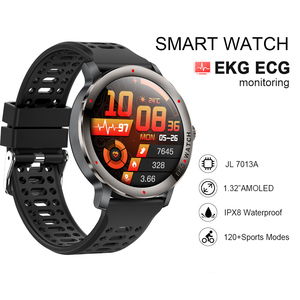
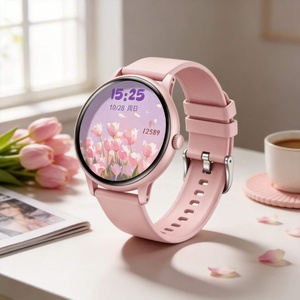
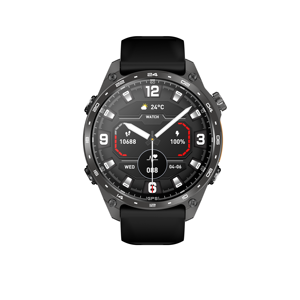
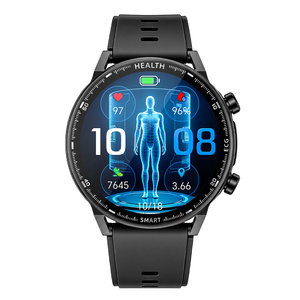
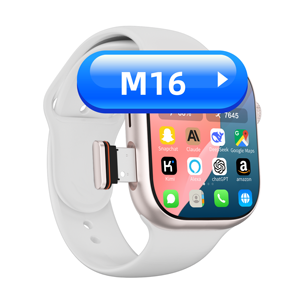
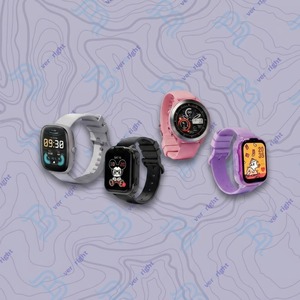
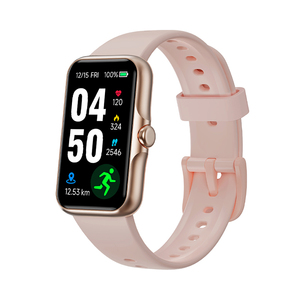
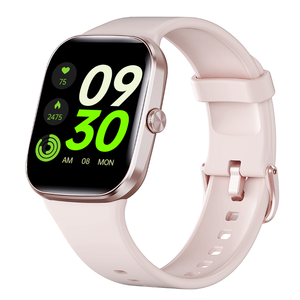
Understanding the technological maturation, silicon advancements, and supply chain integration driving global B2B smartwatch procurement in 2026.
The global wearable technology sector has experienced a profound shift. Once treated as secondary companion devices, Bluetooth calling smartwatches have matured into indispensable personal health monitors and voice communications nodes. At the center of this revolution lies China's Pearl River Delta (encompassing Shenzhen, Dongguan, and Huizhou), which manufactures over 85% of the world's smart wearable devices. For global brand owners, cross-border distributors, regional consumer electronics importers, and telehealth platform providers, sourcing directly from Top China Bluetooth Calling Watch Factories is no longer merely a cost-saving measure—it is a strategic necessity for staying competitive in software innovation, hardware miniaturization, and rapid time-to-market execution.
Historically, wrist-worn Bluetooth calling was plagued by high power consumption, signal drops, bulky dual-chip architectures (separating BLE data from Classic Audio Bluetooth), and poor acoustic clarity. Today, leading Chinese original design manufacturers (ODMs) and original equipment manufacturers (OEMs) leverage single-chip dual-mode System-on-Chip (SoC) architectures (such as Realtek 8763E, Jerry JL7012, and Nordic nRF platforms). These breakthroughs allow continuous bio-sensing, high-definition Bluetooth call handling, crisp voice assistant interaction, and multi-day battery longevity within sleek 10mm ultra-thin watch chassis.
When selecting a primary manufacturing partner in China, buyers must evaluate technical competencies beyond plastic molding. High-performing suppliers must offer integrated SMT (Surface Mount Technology) lines, proprietary PPG biosensing algorithms, white-label smartphone companion applications (iOS/Android), dynamic noise-cancellation (ENC) acoustic tuning, and international regulatory certifications including ISO13485, CE, FCC, RoHS, and TELEC.
Key technological shifts that corporate procurement officers, product managers, and brand strategists must anticipate over the next 36 months.
Transitioning from legacy dual-chip microcontrollers to integrated single-core SoCs significantly reduces PCB layout footprint by 35% and power consumption by 40%. Modern Bluetooth 5.3/5.4 protocols deliver zero-latency pairing, low-bitrate acoustic transmission, and extended operational range exceeding 15 meters through complex structural walls.
B2B buyers are demanding advanced multi-wavelength optical PPG arrays capable of continuous blood oxygen (SpO2), HRV (Heart Rate Variability), stress monitoring, and optical blood pressure trend analysis. Premium models now feature single-lead ECG gold-plated stainless steel electrodes for real-time arrhythmia screening.
Wrist-based calling quality is heavily reliant on acoustic cavity engineering. Top factories now embed dual MEMS microphones supported by DSP Environmental Noise Cancellation (ENC) algorithms to isolate human voice frequencies from ambient wind, urban traffic, and industrial background noise.
Moving beyond optical PPG trend estimations, high-end medical-focused smartwatches integrate sub-miniature inflatable air pumps and micro-pressure sensors directly into the watch strap or chassis, delivering clinical-grade oscillometric blood pressure readings for senior care and remote patient monitoring (RPM).
Procurement trends show a rapid decline in low-margin TFT LCD panels in favor of 1.43-inch and 1.96-inch AMOLED retina-grade displays (up to 466x466 pixel resolution, 600+ nits brightness) supporting Always-On Display (AOD) functionality and customized UI smooth transition effects.
Software ecosystems have evolved. Leading factories supply turnkey SDKs enabling wearers to grant real-time health data access to family members or caregivers via cloud synchronization—a major selling point for senior-focused wearables and wellness subscription models without recurring monthly consumer fees.
Compare standard market chip solutions utilized by Chinese manufacturing partners to optimize performance, cost, and battery life balance.
| Chipset Platform | Bluetooth Specs | Display Architecture | Calling Audio Quality | PPG Sensor Support | Target B2B Segment |
|---|---|---|---|---|---|
| Realtek 8763E Series | Single-Chip BT 5.3 + BLE | Up to 60Hz AMOLED / LCD | High (DSP ENC Noise Reduction) | Dual-LED Multi-Wavelength | Mid-to-High Tier Brand OEM |
| Jerry (JL) 7012 / 7013 | Single-Chip Dual Mode BT 5.3 | HD IPS / Standard AMOLED | Standard Clear Voice | Single/Dual Green PPG Light | Mass Market / High-Volume Promo |
| Nordic nRF5340 + BT Audio | Ultra-Low Power BLE 5.4 + Audio | High-Res Graphic Engine | Studio-Grade HD Voice | Clinical ECG + Multi-PPG Array | Enterprise Medical & Telehealth |
| Spreadtrum (UNISOC) 8541E | 4G LTE + BT 4.2 / Wi-Fi | Full Touch HD Android OS | VoLTE Voice & Video Call | Continuous Optical PPG | Standalone 4G Smartwatches |
Combining world-class R&D engineering, rigorous quality assurance, and flexible white-label customization to accelerate your brand's growth.
Our manufacturing partner facilities house state-of-the-art Siemens and Fuji high-speed SMT lines, Class 10,000 dust-free optical assembly rooms, and automated optical inspection (AOI) stations, guaranteeing structural precision and micro-soldering consistency.
We provide complete software customization. From custom boot logos, UI watch face libraries, and language localization to turnkey Android/iOS app rebranding and RESTful API integration for healthcare databases, our software engineers streamline your digital ecosystem.
Every smartwatch undergoes 100% 3ATM/IP68 vacuum pressure waterproof testing, thermal shock testing (-20°C to 60°C), 48-hour continuous battery burn-in testing, and drop/vibration stress verification before packaging, ensuring an ultra-low RMA rate under 0.5%.
Accelerate your market entry with pre-certified products holding CE (EMC/LVD), FCC ID, RoHS 2.0, REACH, TELEC, and ISO9001 quality management compliance. ISO13485 medical-grade manufacturing documentation is available for specialized health lines.
A step-by-step evaluation framework developed by senior hardware engineers to eliminate sourcing risks and verify factory authenticity.
Many low-cost factories cut corners on RF antenna tuning, resulting in call drops when the smartphone is in a back pocket or briefcase. Demands an anechoic chamber test report verifying OTA (Over-The-Air) TRP (Total Radiated Power) and TIS (Total Isotropic Sensitivity) parameters to ensure stable Bluetooth 5.3 connections across 10-15 meters.
Inaccurate PPG readings are a top cause of consumer returns. Leading Chinese suppliers utilize multi-channel LED arrays (green, infrared, red light) coupled with dynamic filtering algorithms that compensate for skin pigmentation variations, motion artifacts during high-intensity workouts, and ambient light leaks.
Bluetooth calling requires open acoustic speaker holes and microphone ports, making IP67/IP68 water resistance challenging. Inspect whether the factory uses professional Japanese ePTFE micro-porous waterproof acoustic membranes that allow sound waves to pass freely while completely blocking water molecules under high atmospheric pressures.
Ensure the battery cells are pure cobalt polymer lithium batteries with Seiko-brand protection IC boards. This prevents battery swelling, overcharging, short-circuit hazards, and capacity degradation, maintaining 80%+ battery health even after 500 charge cycles.
Essential questions answered regarding Minimum Order Quantities (MOQ), custom tooling, firmware development, warranty terms, and shipping logistics.
For neutral stock items without customization, the MOQ starts as low as 50 to 100 units. For laser-etched custom logos on watch backs and branded gift boxes, standard MOQ is typically 500 units. For full OEM customization including custom housing colors, customized app branding, and bespoke firmware UI, the MOQ is generally 1,000 to 2,000 units per order.
Wrist-worn optical PPG devices estimate blood pressure trends by analyzing arterial pulse waveform velocities. For optimal monitoring value, users should calibrate the watch against a certified upper-arm cuff monitor. While PPG trends provide valuable daily wellness awareness and heart rate variability tracking, they are designed for wellness reference rather than clinical diagnosis.
Yes. Leading Chinese manufacturers provide complete white-label companion apps (such as DaFit, FitCloudPro, or proprietary custom apps). Overseas buyers can customize the app name, logo, UI color palette, cloud server location (AWS/Google Cloud compliant with GDPR and HIPAA data privacy laws), and integrate third-party APIs like Apple Health and Google Fit.
No. Standard OEM/ODM hardware purchases include full access to the companion mobile application, health monitoring dashboards, family remote care sharing features, and firmware OTA (Over-The-Air) updates without any mandatory monthly subscription fees for buyers or end-consumers.
Evaluation samples with standard neutral packaging are dispatched within 2 to 4 business days. Customized OEM pre-production samples require 7 to 10 days. Mass production lead time for bulk orders of 1,000 to 10,000 units is typically 18 to 25 calendar days after sample approval and deposit confirmation.
Reliable China suppliers provide a comprehensive 12-month quality warranty on all hardware components. In the event of defective units exceeding agreed RMA thresholds (typically 0.5%), suppliers provide spare unit replacements (0.5% to 1% free spare parts shipped with bulk orders) or repair services for eligible manufacturing defects.
All smartwatches equipped with built-in lithium-polymer batteries are accompanied by certified UN38.3 test reports, MSDS (Material Safety Data Sheets), and Air/Sea Transport Safe Appraisal Certificates. Goods can be safely shipped via express air freight (DHL/FedEx/UPS), air cargo, or ocean freight to North America, Europe, Australia, and worldwide.