1. Structural Engineering of Modern Smart Fall Alarm Systems
Traditional PERS pendants relied on basic single-threshold acceleration triggers, leading to an unsustainable false-alarm rate exceeding 60%. Next-generation fall detection smartwatches manufactured in top Chinese OEM factories integrate high-precision multi-axis sensors combined with edge-computing neural networks to deliver continuous, real-time fall verification directly on the wrist.
6-Axis MEMS Kinematics
Combines a 3-axis accelerometer and a 3-axis gyroscope (such as Bosch BMI270 or STMicroelectronics LSM6DSOX) sampling spatial acceleration and angular velocity at 100Hz to capture complex biomechanical trajectory changes.
Multi-Stage Fall Verification
Execution of a four-phase state machine: Free Fall (weightlessness), Impact Phase (high G-force peak), Post-Fall Inertia (prolonged lack of movement), and Posture Displacement (wrist position relative to gravity).
Biometric Sensor Fusion
Combines sudden impact detection with rapid optical Photoplethysmography (PPG) sampling to monitor post-impact cardiac spikes or arrhythmia, validating bodily distress prior to initiating emergency dials.
Algorithmic Mitigation of False Positives
A primary failure mode in elderly wearable telecare is the abandonment of devices due to accidental distress calls caused by everyday movements such as sitting down abruptly, dropping an arm onto a desk, or clapping. Leading OEM factories solve this via localized AI model execution (TinyML). By training algorithms on vast datasets of human gait, accidental slips, and daily activities, the smartwatch microcontroller (such as Nordic Semiconductor's nRF52840 or Ambiq Micro Apollo series) evaluates contextual physics before executing the 30-second cancellation countdown phase.
2. Emergency Connectivity & Telemetry Infrastructure
A fall detection wearable is only as effective as its communication backbone. When a fall event is confirmed, the device initiates an automated protocol designed to breach connectivity barriers across varying environments.
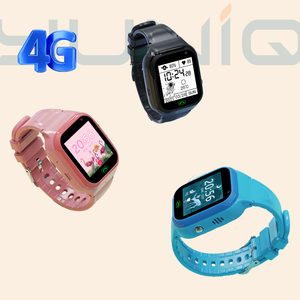
Cellular Direct-to-Carrier (4G LTE-M / NB-IoT / VoLTE): Standalone senior fall watches utilize integrated eSIM or Nano-SIM modules operating on global 4G bands (B1/B3/B7/B8/B20 for Europe, B2/B4/B5/B12/B13/B66 for North America). Upon impact verification, the watch triggers an automated Voice-over-LTE emergency call sequence to pre-programmed family members or centralized emergency dispatch systems (e.g., 911 / 112 / 999 protocols), backed by automatic two-way speakerphone activation.
Tri-Mode Hybrid Positioning (GPS + Wi-Fi Sniffing + LBS): Location accuracy during an emergency is paramount. Advanced factory configurations integrate low-power GNSS receivers (GPS, GLONASS, BeiDou, Galileo) working in parallel with Wi-Fi MAC address sniffing. Indoors, where satellite signals degrade, the watch reads ambient Wi-Fi access points to yield indoor location precision within 5 to 15 meters.
Bluetooth 5.3 & Gateway Tethering: For institutional care facilities (nursing homes, assisted living complexes), fall smartwatches act as continuous BLE nodes, relaying telemetry metrics to local wall-mounted gateways without requiring cellular subscriptions, drastically lowering operating expenses for enterprise healthcare providers.
3. Product Development Trends in Smart Health Wearables (2025–2030)
The convergence of consumer electronics and certified medical devices is reshaping product roadmaps across Chinese manufacturing hubs. Key technical vectors driving product iteration include:
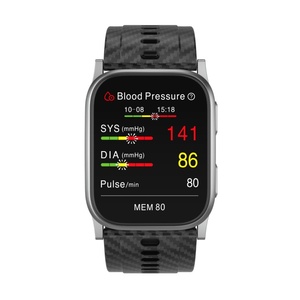
1. Dual-Track Blood Pressure Measurement: Optical PPG vs. Oscillometric Air-Pumps: While standard optical PPG sensors provide non-invasive, continuous blood pressure trend estimates suited for daily wellness monitoring, high-spec senior health smartwatches (such as the CARE AIR series) now integrate micro-air pumps and inflatable wrist cuffs within the strap. This hybrid approach delivers clinical-grade oscillometric blood pressure readings on demand alongside optical continuous monitoring.
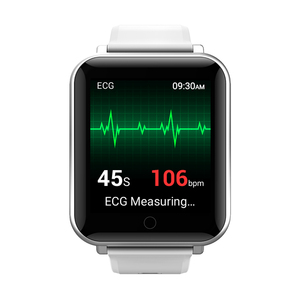
2. Single-Lead & Multi-Lead Electrocardiogram (ECG) Integration: Modern senior smartwatches utilize titanium-coated electrode rings along the bezel and backplate. When held for 30 seconds, the device captures single-lead ECG rhythms, utilizing AI to screen for Atrial Fibrillation (AFib), Premature Ventricular Contractions (PVCs), and Sinus Rhythm abnormalities, exporting medical PDF waveforms for physician evaluation.
3. Non-Invasive Metabolic & Trend Metrics: R&D investments are expanding beyond basic cardiac metrics. Algorithmic estimation of continuous blood glucose trends, blood oxygen saturation (SpO2), stress via Heart Rate Variability (HRV), nocturnal sleep staging, and skin temperature monitoring are becoming standardized features across midrange and flagship factory platforms.
4. Kinetic Energy Harvesting & Extended Battery Lifespans: High power consumption has historically plagued 4G-enabled PERS watches. OEM developers are deploying ultra-low-power display technologies (MIP memory-in-pixel and power-optimized AMOLED), adaptive GPS sampling rates, and battery capacities reaching 1100mAh to deliver 7 to 14 days of operating autonomy on a single charge.
4. Global Sourcing & Procurement Trends for B2B Importers
Importers, private-label brands, and institutional buyers sourcing fall alarm smartwatches from China encounter an evolving regulatory and procurement environment. Successfully navigating this market requires evaluating key strategic trends:
Modular Software & API Openness
Global distributors are increasingly avoiding locked, proprietary app ecosystems. The trend favors OEM factories providing comprehensive SDKs (Software Development Kits), Android/iOS companion app white-labeling, and RESTful API integration for direct data piping into third-party Remote Patient Monitoring (RPM) platforms and hospital management systems.
Zero-Subscription Business Models
Unlike Western PERS platforms that enforce mandatory monthly service fees ($20–$50/month), Chinese manufacturing brands emphasize subscription-free software models. Devices are sold as hardware-complete packages where end-users or care facilities leverage their own SIM cards and cloud infrastructure, yielding an extraordinary value proposition for retail and enterprise channels.
Regulatory Compliance & Medical Standards
Leading factories in Shenzhen operate under ISO 13485 (Medical Devices Quality Management System) standards. European importers prioritize products compliant with CE-MDR (Medical Device Regulation), RoHS, and RED directives, while North American buyers require FCC certification, PTCRB carrier approval, and FDA Class II exempt registration for health tracking wearables.
Customized OEM/ODM Hardware Molding
To differentiate in competitive retail markets, B2B buyers are requesting custom enclosure designs incorporating larger tactile physical SOS buttons, anti-microbial silicone or hypoallergenic leather straps, IP68 submersion waterproofing for bath safety, and high-visibility high-contrast UI screens designed specifically for visually impaired seniors.
5. Why Partnering with FITVII Factory Ecosystem Ensures Sourcing Dominance
FITVII stands at the technological forefront of health-tracking smartwatch manufacturing. With an international footprint, robust R&D architecture, and deep expertise in biometric wearable engineering, FITVII provides B2B partners with an unassailable competitive advantage.
-
80,000+ Verified User Baseline: Backed by widespread consumer adoption and an average 4.6/5 customer rating, FITVII hardware platform algorithms are refined continuously against real-world human data.
-
Proprietary Sensor Calibration Algorithms: Comprehensive software calibration protocols ensure PPG blood pressure, ECG, and blood glucose trend monitoring deliver actionable wellness awareness with high repeatability.
-
End-to-End Manufacturing Rigor: In-house SMT surface-mount lines, automated optical inspection (AOI), IP67/IP68 water-immersion testing, and drop/vibration reliability chambers ensure uniform mass-production quality.
-
Comprehensive After-Sales & Warranty Protection: Dedicated enterprise support featuring 45-day trial terms, 1-year product replacement/repair coverage, and multi-language technical documentation for seamless end-user onboarding.