Explore top-tier long-battery wearables engineered with advanced MCU architectures, silicon-anode power cells, and medical-grade bio-sensor arrays built for global distributors.
An executive analysis of hardware engineering, power management protocols, and supply chain capabilities driving China's dominant wearable manufacturing ecosystem.
The global smart wearable market has experienced a fundamental paradigm shift. Where early consumer wearables sacrificed endurance for screen resolution and real-time processing, today’s enterprise buyers and consumer markets prioritize uninterrupted battery longevity alongside multi-sensor health telemetry. As the world's primary hardware manufacturing hub, China's smart wearable ecosystem in Shenzhen and Dongguan has innovated across three key pillars: high-density cell chemistry, ultra-low-power microcontrollers (MCUs), and dynamic power-budgeting firmware algorithms.
For global brand owners, healthcare telemetry integrators, and B2B distributors, partnering directly with specialized long battery smartwatch factories in China delivers significant competitive advantages. By bypassing intermediaries and sourcing directly from verified original equipment manufacturers (OEM) and original design manufacturers (ODM), enterprises secure higher gross margins, full control over software SDK customization, and rigorous quality assurance compliant with international standards such as CE, FCC, RoHS, UN38.3, and MSDS.
Modern Chinese wearable factories employ silicon-anode lithium-polymer cells yielding energy densities exceeding 700 Wh/L. This engineering breakthrough allows 400mAh to 800mAh batteries to fit within ultra-thin wrist profiles without adding bulk.
Leading factories utilize dual-chipsets featuring high-performance APs (Application Processors) alongside ultra-low-power MCU co-processors (e.g., Apollo/Nordic). The primary processor sleeps during baseline tracking, cutting standby current draw down to micro-Ampere thresholds.
Proprietary PPG (photoplethysmography) and ECG algorithms adjust LED pulse frequency dynamically based on user motion states. During rest periods, bio-sensor sampling frequency drops, dramatically extending battery lifespan without compromising diagnostic trend integrity.
Selecting the right manufacturing partner requires evaluating their engineering execution across firmware optimization, hardware component selection, and thermal/power management circuitry. The table below outlines key technical parameters distinguishing standard consumer smartwatches from enterprise-grade long battery models manufactured in China:
| Architecture Component | Standard Consumer Smartwatch | Enterprise Long Battery Smartwatch (China OEM) | B2B Operational Advantage |
|---|---|---|---|
| Microcontroller (MCU) | Single High-Power Chip (e.g., Wear OS base) | Dual-Core MCU (Nordic 5340 / Realtek / Ambiq) | Reduces baseline idle battery consumption by up to 75% |
| Battery Chemistry | Standard Cobalt Lithium-Ion (450 Wh/L) | Silicon-Carbon Anode Poly-Li Cell (680-750 Wh/L) | Higher capacity in standard 44mm/49mm chassis form factors |
| Display Technology | Standard High-Nits AMOLED (Always-On) | Memory-in-Pixel (MIP) or Low-Hz Dynamic AMOLED | drastically cuts display backlight power draw in bright outdoor light |
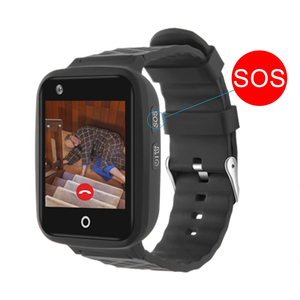
| GPS & Cellular Telemetry | Continuous Unregulated Polling | GNSS Dual-Band Duty Cycling & e-SIM Power Modes | Enables 48+ hours of active GPS outdoor tracking and SOS connectivity |
| Operating System (OS) | Heavy Android / High RAM Footprint | Lightweight RTOS (Real-Time Operating System) | Instant boot times, zero background RAM leakage, maximum stability |
Understanding where wearable power tech is headed ensures your sourcing strategy remains future-proof against rapidly evolving consumer and enterprise market demands.
Future long battery smartwatches are integrating multi-spectral PPG arrays capable of estimating blood glucose trends, uric acid levels, and arterial stiffness. Manufacturers are pairing these continuous sensors with dedicated AI edge processors to compute vital signs locally without transmitting raw data continuously, saving battery bandwidth.
Chinese factory R&D divisions are embedding transparent photovoltaic (PV) solar film layers directly beneath smart watch screens. For outdoor and rugged cellular models, solar energy harvesting provides trickle-charging capabilities that extend field operation indefinitely under ambient sunlight.
Enterprise buyers are moving away from wearables tied to costly monthly software subscriptions. OEM suppliers now offer turnkey white-label Android/iOS companion apps with encrypted family data sharing, remote monitoring, and direct cloud API synchronization out of the box without recurring licensing fees.
When evaluating long battery smartwatch suppliers in China, enterprise purchasing managers must look beyond unit FOB cost. Strategic procurement teams prioritize four critical supplier competencies to minimize long-term operational risk:
Top-tier factories maintain modular motherboards where sensors (ECG, PPG, GPS, 4G LTE, Fall Detection) can be populated or depopulated based on target market price points. This modularity reduces tooling lead times for custom OEM orders from months to weeks.
Transporting lithium batteries internationally requires strict compliance. Leading suppliers provide certified MSDS, UN38.3 transport safety test reports, and IEC 62133 compliance documentation, ensuring frictionless customs clearance across air and sea freight channels.
B2B brands catering to insurance providers, senior care facilities, or enterprise wellness programs require open Bluetooth protocols and REST APIs. Leading China factories provide SDK documentation allowing developers to extract raw sensor data directly into custom software backends.
Partnering with our China long battery smartwatch manufacturing infrastructure delivers end-to-end reliability, rigorous quality engineering, and market-proven consumer trust.
Our designs are backed by over 80,000+ verified end-user reviews with a 4.6/5 average satisfaction rating. This extensive market feedback loop informs continuous hardware iterations and algorithm refinements.
From custom silk-screen logo printing, bespoke gift-box packaging, and custom casing colorways to pre-installed language firmware, our production lines accommodate full white-label brand tailoring.
Every watch undergoes 100% automated SMT inspection, 48-hour battery cycle burn-in testing, IP67/IP68 vacuum waterproof chamber verification, and optical sensor calibration against medical blood pressure cuffs prior to packing.
Essential answers covering minimum order quantities (MOQ), custom branding options, warranty terms, and manufacturing lead times.
For standard off-the-shelf inventory with neutral packaging, our sample MOQ starts as low as 10 units. For custom logo laser-engraving and branded packaging boxes, standard OEM MOQ is 500 units. Full ODM custom mold developments require an initial order of 2,000 to 3,000 units depending on chassis complexity.
Our smartwatches utilize advanced photoplethysmography (PPG) optical sensors paired with pulse wave velocity (PWV) algorithms. For maximum trend consistency, users perform an initial baseline calibration against a validated upper-arm cuff. Select models (e.g., CARE AIR 2 series) integrate miniature micro-air pumps and inflatable wrist cuffs for physical oscillometric blood pressure measurements.
No. All our standard smartwatch models and white-label companion applications operate on a zero-monthly-subscription model. Brand owners and consumers enjoy unrestricted lifetime access to baseline health tracking, family remote monitoring, and firmware updates.
Our manufacturing facilities are ISO9001 certified. All smartwatch models hold CE, FCC, RoHS, and TELEC certifications. Battery cells are independently tested and certified under UN38.3, MSDS, and IEC 62133 regulations, enabling smooth customs clearance across North America, Europe, Australia, and Asia.
Sample orders and small wholesale quantities ship within 2 to 5 business days. Customized OEM mass production orders (500 to 5,000 units) typically require 15 to 25 calendar days for SMT assembly, aging tests, packaging, and final quality control release.
We provide a comprehensive 1-year factory warranty covering hardware defects. Eligible defective units identified during incoming inspection or under normal consumer use are replaced or repaired promptly. We also supply spare parts, display assemblies, and technical engineering support for authorized regional repair centers.
Request factory wholesale pricing, order sample evaluation units, or discuss custom OEM/ODM software and hardware specifications directly with our engineering team.