Explore our export-ready, high-accuracy PPG health tracking smartwatches optimized for international brands, healthcare distributors, and corporate wellness programs.
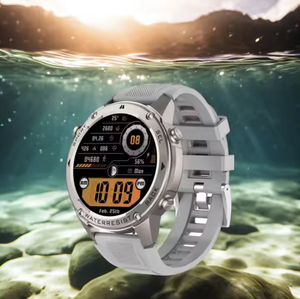
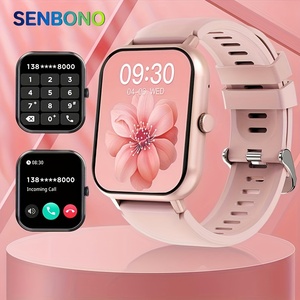
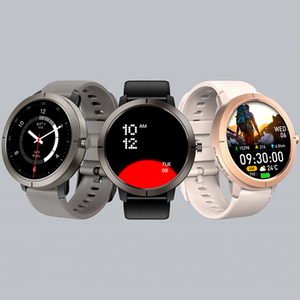
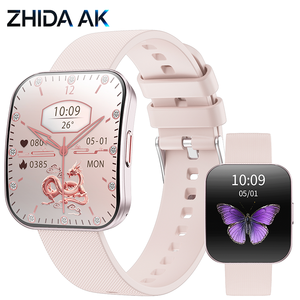
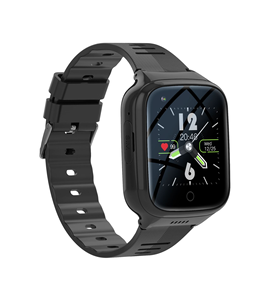
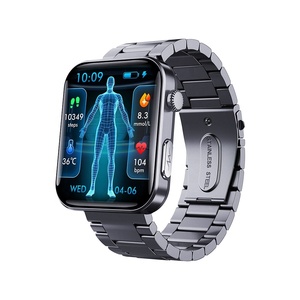
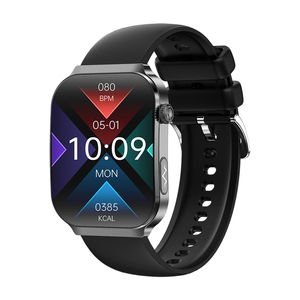
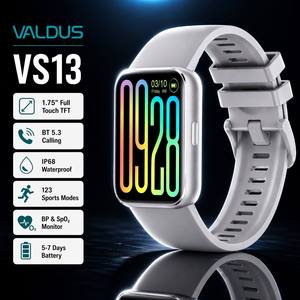
Operating as a premier tier-1 OEM/ODM smartwatch manufacturer in Shenzhen and Dongguan, our manufacturing ecosystem bridges advanced optoelectronic hardware design with medical-grade quality assurance.
Our manufacturing base utilizes ISO Class 7 (Class 10,000) automated SMT surface-mount lines equipped with high-precision Fuji placement machines. We ensure void-free soldering for high-density analog front-end (AFE) biosensor chipsets, minimizing background electronic noise in PPG pulse wave captures.
Every PPG smartwatch produced in our factory undergoes multi-point optical luminance and spectral calibration. Using automated darkroom test fixtures, we calibrate green (525nm), red (660nm), and infrared (940nm) emitter intensities against varying tissue densities and skin tone absorption scales.
We operate under strict ISO 13485 (Medical Devices Quality Management System) and ISO 9001 standards. Our complete smartwear product line holds comprehensive international certifications including CE (MDR/EMC), FCC ID, RoHS, REACH, and UN38.3 battery transport compliance.
Understanding the optical dynamics, signal conditioning, and algorithmic modeling required to transform microvascular optical reflections into clinical-grade physiological metrics.
Photoplethysmography (PPG) is an optically obtained volumetric measurement of an organ's blood flow. As the heart pumps blood through the vascular system during the cardiac cycle, pressure waves travel through the arterial network, expanding microscopic arterioles in the dermis and subcutaneous tissue. When light emitted by a LED strikes the skin, a portion is absorbed by hemoglobin, tissue, and interstitial fluids, while the remaining photons scatter back to a photodiode detector.
Our OEM PPG smartwatch modules leverage multi-spectral LED configurations. Green LEDs (~525nm) demonstrate optimal light absorption by oxygenated and deoxygenated hemoglobin at superficial dermal depths, making them ideal for high-heart-rate tracking during vigorous movement. Red (~660nm) and Infrared (~940nm) LEDs penetrate deeper into subcutaneous vascular beds, enabling differential absorption calculations required for functional arterial oxygen saturation (SpO2) and pulse wave velocity (PWV) estimations.
The primary engineering bottleneck in wearable PPG devices is motion artifact pollution (caused by arm movements, walking cadence, and sensor displacement) and low baseline Signal-to-Noise Ratio (SNR) in dark skin pigmentation or cold peripheral environments. Our hardware engineering team resolves these challenges through a three-tiered architecture:
By measuring the micro-second delay between the electrical cardiac depolarization (ECG R-wave) and the peripheral optical pulse arrival (PPG peak), our firmware calculates Pulse Transit Time (PTT). This enables continuous, non-invasive blood pressure trend estimation without an inflatable arm cuff.
High-frequency PPG sampling (up to 500Hz) isolates inter-beat intervals (RR-intervals) with millisecond accuracy. Our algorithm processes time-domain (SDNN, RMSSD) and frequency-domain (LF/HF ratios) parameters to quantify sympathetic versus parasympathetic autonomic nervous balance.
For specialized medical-care smartwatches (such as our CARE AIR series), we integrate ultra-miniature piezoelectric micro-pumps and TPU air cuffs within the watch strap, combining PPG optical monitoring with true oscillometric blood pressure measurement.
A reference standard for B2B procurement managers and OEM product directors choosing between optical sensing modalities.
| Architecture Class | Sensor Configuration | Target Biomarkers Measured | Battery Consumption | Optimal Commercial Application |
|---|---|---|---|---|
| Basic Consumer PPG | Single Green LED (525nm) + Single Photodiode | Basic HR, Resting Heart Rate, Simple Sleep Duration | Ultra-Low (~15-20 Days) | Budget Fitness Trackers, Promotional Electronics |
| Multi-Spectral PPG Array | 4-LED Array (Green/Red/IR) + Dual Photodiodes | Continuous HR, Dynamic SpO2, Sleep Stages, HRV Stress | Low (~7-12 Days) | Mid-to-High End Outdoor & Sports Smartwatches |
| ECG + PPG Fusion Engine | Multi-LED PPG Array + Stainless/Titanium Electrodes | Arrhythmia (AFib) Detection, PTT Blood Pressure, HRV, SpO2 | Moderate (~5-7 Days) | Senior Care Telehealth, Corporate Wellness, Medical Brands |
| Hybrid Oscillometric + PPG | PPG Optical Module + Inflatable Strap Micro-Pump | Clinical BP Systolic/Diastolic, Continuous PPG Monitoring | High (~3-5 Days) | Specialized Hypertension Monitoring & Senior Safety |
Strategic insights for procurement executives navigating technological shifts, regulatory compliance, and consumer demand evolution in wrist-worn wearables.
Future PPG smartwatches are moving beyond simple heart rate monitoring toward non-invasive blood glucose, uric acid, and blood lipid trend evaluation. By utilizing multi-wavelength short-wave infrared (SWIR) spectroscopy combined with deep-learning neural network algorithms, next-generation optical modules correlate interstitial fluid absorption changes with blood chemistry fluctuations.
For B2B buyers, establishing supply partnerships with factories capable of integrating SWIR optics and AI calibration models will be critical for retaining competitive advantages over the next 3 to 5 years.
Cloud-dependent signal processing introduces latency and privacy vulnerabilities under stringent regulations like GDPR and HIPAA. Future PPG devices incorporate Edge AI chipsets (such as ARM Cortex-M33 with dedicated NPU acceleration). Raw pulse-wave anomalies—including Atrial Fibrillation (AFib), premature ventricular contractions (PVCs), and sleep apnea hypopnea index (AHI)—are detected directly on the wrist MCU within milliseconds.
Global distributors are increasingly shifting away from standalone consumer companion apps. The procurement trend strongly favors hardware manufacturers that supply open Application Programming Interfaces (APIs) and Mobile Software Development Kits (SDKs for iOS & Android). This allows enterprise healthcare providers to stream encrypted PPG raw data directly into proprietary hospital electronic health record (EHR) platforms.
From custom industrial design (ID) and tooling engineering to localized software branding and white-label SDK deployment.
3D CAD modeling, custom alloy casing (zinc alloy, titanium, 316L stainless steel), ergonomic optical lens curvature, and custom IP68 water-resistance enclosure engineering.
Engineering multi-layer PCBAs optimized for low power consumption, signal shield layout, and custom light-guide barrier molds to prevent LED light bleeding into photodiodes.
White-label companion apps with multi-language localization (28+ languages), custom UI icon designs, brand boot logos, and cloud server deployment (AWS/Google Cloud).
Full support for client-brand product testing, providing documentation for FCC ID, CE, Telec, Anatel, BIS, RoHS, and medical device compliance filing worldwide.
Detailed technical and commercial answers addressing common inquiries from global importers, brand owners, and procurement directors.
For standard in-stock wholesale models with custom logo silk-screening or laser engraving, our typical Minimum Order Quantity (MOQ) starts at 100 to 500 units. For deep OEM customization—including custom housing color anodization, tailored packaging boxes, custom boot animations, and modified firmware—the MOQ is typically 1,000 to 3,000 units depending on tooling requirements. Completely custom ID/MD ODM projects requiring new plastic/metal mold creation start at 5,000 units.
We maintain an in-house physiological clinical testing laboratory equipped with medical-grade multi-lead ECG monitors, clinical oscillometric blood pressure reference cuffs, and metabolic cart systems. Our algorithms are trained against a database of over 100,000 annotated pulse-wave data samples collected from diverse demographic groups representing varying age profiles, skin phototypes (Fitzpatrick scale I-VI), and activity states. Factory calibration ensures high correlation coefficients (R > 0.95) against medical reference monitors under controlled stationary conditions.
Yes. We offer fully documented iOS (Swift/Objective-C) and Android (Java/Kotlin) Software Development Kits (SDKs) alongside Bluetooth Low Energy (BLE) protocol documentation for enterprise customers. This allows software development teams to receive real-time or sync-based PPG raw data streams (inter-beat intervals, photoplethysmogram waveforms, blood oxygen levels, step counts) directly into proprietary medical portals, remote patient monitoring (RPM) platforms, or health insurance applications without routing data through third-party servers.
Sample evaluation units are dispatched within 3 to 5 business days via express air courier (DHL/FedEx/UPS). Custom OEM branding prototype samples with customized packaging and firmware take approximately 10 to 14 business days. Full-scale bulk mass production runs typically require 25 to 35 calendar days following sample sign-off and deposit confirmation, depending on SMT component sourcing timelines and factory schedule loading.
Our quality management system enforces 100% incoming inspection (IQC) on raw OLED/AMOLED panels, optical sensor ICs, and lithium-polymer batteries. During assembly, products pass through automated optical inspection (AOI), 100% vacuum-chamber IP67/IP68 waterproof testing, dynamic drop/vibration testing, thermal shock chambers (-20°C to 60°C), and 48-hour continuous battery aging cycles. Every battery pack includes independent hardware Protection Circuit Modules (PCM) certified under UN38.3, MSDS, and IEC 62133 safety mandates for global freight routing.
While our consumer smartwatches are marketed as general wellness devices under standard CE-EMC, RED, FCC, and RoHS certifications, we regularly partner with medical device importers to manufacture specialized hardware platforms. Our factory holds an active ISO 13485 certification, and we provide complete Design History Files (DHF), Device Master Records (DMR), optical test data, and biocompatibility test reports (ISO 10993 for skin contact materials) to support your regulatory consultants during FDA 510(k) or European CE MDR submission filings.
Elevate your wearable tech portfolio with medical-grade optical sensor designs, high-accuracy health algorithms, and reliable OEM/ODM mass production capabilities. Speak directly with our senior engineering and export sales team today.