Explore top-performing PPG/ECG bio-sensor smartwatches engineered for stress tracking, HRV analysis, and continuous health monitoring. Available for global OEM/ODM wholesale distribution.
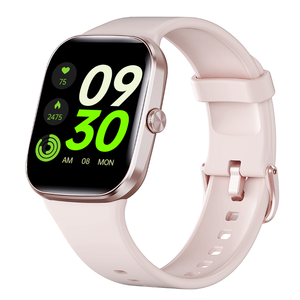
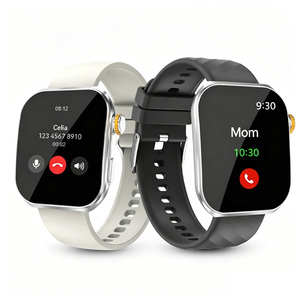
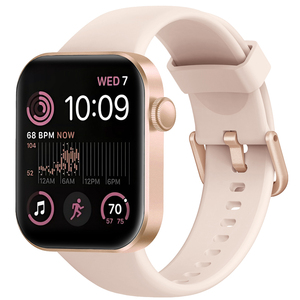
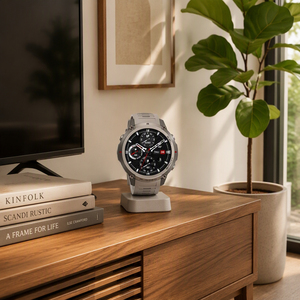
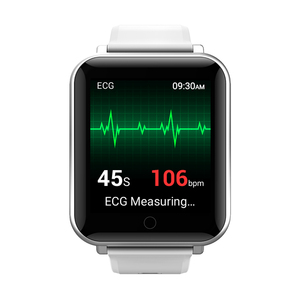
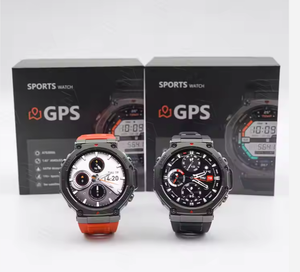
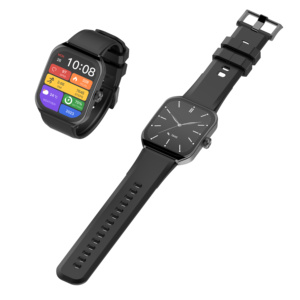
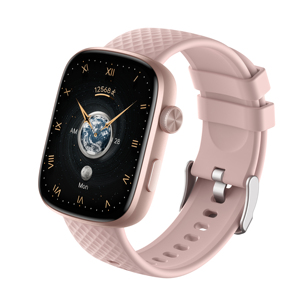
In the rapidly transforming landscape of global digital health technology, China has established itself as the undisputed epicenter for smart health watch manufacturing and export. Stress monitoring has evolved from a novel luxury feature into a core biometric requirement across consumer electronics, corporate wellness programs, and remote patient monitoring (RPM) platforms. Modern stress monitoring smartwatches no longer rely solely on basic heart rate spikes; they integrate sophisticated multi-wavelength Photoplethysmography (PPG) optical sensor arrays, Electrocardiography (ECG) conduction pads, and multi-parameter autonomic nervous system (ANS) analytics.
For international importers, brand owners, cross-border e-commerce sellers, and medical device distributors, sourcing stress monitoring smartwatches directly from Tier-1 Chinese suppliers presents unmatched advantages in cost efficiency, rapid prototyping, scale, and algorithmic accuracy. This industry whitepaper breaks down the physiological fundamentals of wearable stress monitoring, technical hardware standards, OEM/ODM customized manufacturing workflows, global compliance requirements, and future procurement forecasts for global B2B buyers.
Understanding the underlying engineering behind real-time stress assessment and Autonomic Nervous System (ANS) evaluation in modern Chinese smartwatches.
Heart Rate Variability (HRV) measures micro-variations between consecutive heartbeats (R-R intervals). Advanced algorithms evaluate time-domain metrics (SDNN, RMSSD) and frequency-domain metrics (LF/HF ratio) to calculate stress indexes from 1 to 100.
High-end Chinese smartwatches utilize multi-channel green, red, and infrared LED emitters combined with high-sensitivity photodetectors. This reduces optical interference from skin pigmentation, movement artifacts, and ambient light variance.
Emerging flagship models integrate galvanic skin response (GSR) and EDA micro-sensors that detect microscopic sweat gland activity triggered by sympathetic nervous system activation, delivering instantaneous stress detection.
By cross-referencing circadian sleep quality data, skin temperature fluctuations, and resting heart rate trends, AI algorithms provide predictive stress load indexes mapped to physiological cortisol dynamics.
Combining titanium or stainless steel bio-electrode rings with precision analog front-end (AFE) chips allows users to capture medical-grade ECG trace waveforms, identifying arrhythmia and stress-induced atrial fibrillation risks.
Dual-axis and 6-axis accelerometer inputs are fed into neural network noise-cancellation algorithms. This filters out wrist motion during physical workouts, ensuring accurate background stress readings throughout active days.
Strategic insights into technology adoption, sensor convergence, market demands, and next-generation procurement priorities for 2025–2030.
The market is rapidly shifting away from single-function fitness trackers toward holistic wellness platforms. Sourcing trends indicate that over 78% of B2B inquiries now demand integrated multi-sensor suites. Future stress monitoring smartwatches will combine optical PPG with non-invasive glucose trend estimation, cuffless blood pressure monitoring, continuous SpO2 tracking, and ambient temperature sensing within a single low-power MCU framework.
Display technology in stress monitoring wearables has reached a tipping point. Traditional TFT LCD screens are being systematically replaced by high-definition AMOLED touch panels (ranging from 1.43-inch round to 1.96-inch square displays). AMOLED technology offers self-emissive pixels, deeper contrast ratios, superior outdoor readability, and up to 40% lower power consumption during Always-On Display (AOD) operation.
Enterprise buyers, health insurance providers, and digital health software companies increasingly require open SDKs (Software Development Kits) and raw BLE data stream access. Leading Chinese manufacturers are responding by offering customizable companion apps (iOS/Android) alongside open API gateways. This allows global clients to integrate real-time HRV and stress metrics into their proprietary corporate wellness dashboards or telemedicine platforms.
As global health authorities tighten oversight on wellness claims, Chinese exporters are proactively acquiring ISO 13485 medical device quality management certifications. Buyers are shifting procurement orders to factories capable of delivering products compliant with CE MDR (Medical Device Regulation) in Europe and FDA 510(k) clearances in North America, bridging the gap between consumer electronics and clinical diagnostic devices.
Evaluating key technical parameters, manufacturing standards, software capabilities, and quality control benchmarks across the supply chain.
| Evaluation Parameter | Tier-1 OEM/ODM Manufacturers (e.g., FITVII Ecosystem) | Generic Trading Companies / Small Workshops |
|---|---|---|
| Optical Sensor Modules | Multi-wavelength PPG (Texas Instruments / Goodix / Osram AFE) | Single Green LED basic photodiode (High motion noise) |
| HRV Stress Algorithm | Clinical-grade R-R interval SDNN/RMSSD algorithmic processing | Estimated static pulse-rate math without HRV correlation |
| Waterproof Construction | Precision sonic sealing, IP67 / IP68 / 5ATM certified testing | Basic rubber gasket sealing (Inconsistent liquid protection) |
| Firmware & App White-Labeling | Full custom UI/UX, multi-language support, custom SDK/API access | Pre-compiled generic app with fixed branding and no API |
| Battery Safety & Longevity | Pure cobalt Seiko protection IC cells (300+ charge cycles) | Ternary polymer cells (Prone to rapid capacity degradation) |
| Factory Quality Audits | ISO 9001, ISO 13485, BSCI audited SMT cleanroom facilities | No formal quality management audit compliance |
| Order Flexibility (MOQ) | Flexible initial orders for custom branding (100–1,000 units) | High MOQ requirements for off-the-shelf catalog stock |
Why leading international brands choose our supply chain for turn-key OEM, ODM, and contract manufacturing solutions.
Over 80 in-house hardware engineers, firmware developers, and bio-algorithm scientists continuously optimize optical sensor layout, antenna performance, and battery efficiency.
Every produced unit undergoes 100% automated optical sensor calibration, thermal chamber cycling (-20°C to 60°C), IPX8 pressure tank immersion, and drop impact testing.
Our product lines are fully certified for worldwide export, carrying CE, FCC, RoHS, REACH, TELEC, and UN38.3 battery transport safety clearance documentation.
Clear answers to crucial operational questions for global buyers, product managers, and supply chain directors.
For standard factory-ready models with custom laser-etched logos or custom packaging, our typical MOQ starts as low as 100 to 500 units. For full ODM developments involving custom tooling, custom casing molds, and tailored PCB layouts, the standard initial run requirement is typically 1,000 to 3,000 units depending on component specifications.
Leading suppliers benchmark optical PPG raw data and R-R interval outputs against medical-grade ECG holter monitors. Algorithms utilize frequency-domain spectrum analysis (Low Frequency / High Frequency spectral power ratio) to isolate autonomic sympathetic vs. parasympathetic nerve activity, delivering reliable 24/7 stress indexes.
Yes. We offer complete white-label application solutions for both iOS and Android platforms. This includes re-skinning the user interface, incorporating your brand logo, setting custom color schemes, configuring localized language translations, and setting up dedicated cloud servers (AWS, Google Cloud, Azure) compliant with GDPR data privacy rules.
Sample evaluation units ship within 2 to 4 business days. Standard bulk orders (1,000–5,000 units) require 15 to 25 calendar days for complete SMT assembly, manual quality inspection, aging tests, packaging, and export customs clearance. Expedited production lanes are available for urgent seasonal requirements.
All smartwatches are shipped with complete dangerous goods safety documentation. We provide MSDS (Material Safety Data Sheet), UN38.3 lithium battery safety test reports, and Air/Sea Transport Safety Certificates, ensuring seamless freight clearance through international customs hubs.
We provide a comprehensive 12-to-24 month factory warranty on all hardware components. In the event of defective units (typically under 0.3% RMA rate), we provide free replacement units or spare modules in subsequent shipments, supported by 1-on-1 technical engineering assistance.
Partner with China's premier stress monitoring smartwatch manufacturer. Contact our engineering and sales teams today to receive full product specifications, factory pricing, and sample evaluations.