Ruggedized IP68 waterproof health tracking wearables optimized for Sub-Saharan climate conditions and local consumer demand.
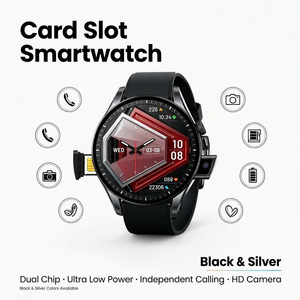
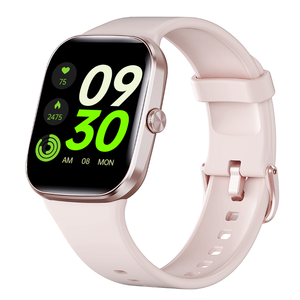
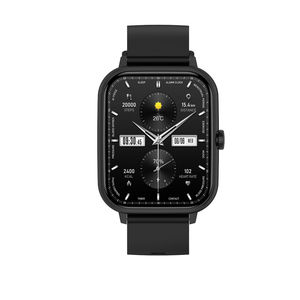
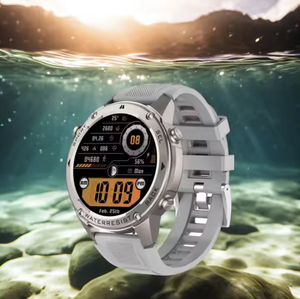
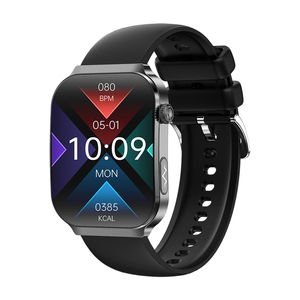
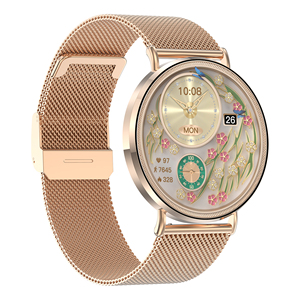
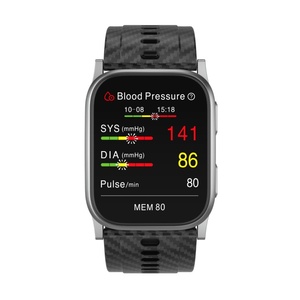
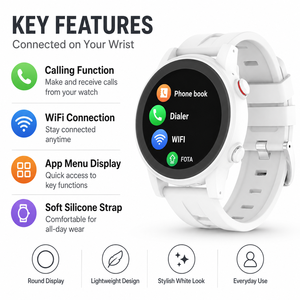
As Sub-Saharan Africa's largest economy and most populous market, Nigeria is undergoing a rapid digital health transformation. Urbanization across metropolitan hubs such as Lagos, Abuja, Port Harcourt, and Kano—combined with an increasing awareness of non-communicable diseases (NCDs) like hypertension and cardiovascular conditions—has driven explosive consumer demand for continuous personal health monitoring devices.
For B2B importers, consumer electronics wholesalers, and medical equipment distributors, sourcing IP68 Health Watches directly from accredited factories represents a high-margin growth opportunity. However, penetrating the Nigerian market requires a nuanced understanding of localized environmental stress factors, hardware reliability expectations, and consumer intent.
Cardiovascular health concerns affect over 30% of Nigerian adults in urban centers. Wearables capable of optical Photoplethysmography (PPG) blood pressure trend estimation and heart rate variability (HRV) analysis fulfill a urgent preventative care need.
The annual Harmattan season introduces micro-fine silica dust across West Africa, while coastal regions maintain high humidity levels (over 85%). Standard IP67 sealing often fails under prolonged particulate exposure; true IP68 ingress protection is mandatory.
Given local power infrastructure variations, Nigerian consumers prioritize devices with extended battery longevity (7 to 12 days of continuous tracking) powered by high-density Lithium-Polymer cells with integrated thermal safety ICs.
Sourcing from reliable OEM/ODM factories ensures that health smartwatches perform accurately under harsh physical conditions. Below is the technical specification benchmark required for commercial distribution in Nigeria.
| Technical Benchmark | Commercial Grade (Standard IP67) | Industrial OEM / Factory Grade (IP68 Health Watch) | Impact on Nigerian Market End-User |
|---|---|---|---|
| Ingress Protection | IP67 (1m water immersion for 30 mins) | IP68 / 5ATM Water & Dustproof Sealed | Resists intense rain storms, sweat, dust storms (Harmattan), and daily handwashing without chassis fogging. |
| Optical PPG Sensor | Single Green LED Light Source | Multi-Wavelength Green + IR Dual Optical Array | Higher signal accuracy across diverse skin tones and dense melanin levels, reducing optical measurement noise. |
| Blood Pressure Tracking | Basic pulse wave conversion | PPG Pulse-Wave Trend Calibration Algorithm | Enables continuous systolic/diastolic trend tracking when calibrated against a validated arm cuff. |
| Battery Thermal Cut-off | Standard Li-ion Protection PCB | NTC Thermistor Protection + Polymer Cell (Up to 45°C) | Prevents battery swelling or degraded cycle life in ambient tropical heat environments (Lagos, Abuja). |
| Cellular & Wireless | Bluetooth 4.2 Legacy Chipset | Bluetooth 5.3 BLE + Optional 4G LTE/GPS Module | Stable pairing with Android/iOS, low power burn, and standalone emergency SOS dialing for elderly users. |
Targeted marketing and distribution require aligning smartwatch features with real-world lifestyle patterns in Nigerian urban and sub-urban environments.
In high-pressure corporate hubs like Victoria Island, Ikoyi, and Maitama, professionals seek sleek, AMOLED screen wearables with Bluetooth call capability and continuous stress/HRV monitoring. The ability to manage business calls hands-free while tracking resting heart rate during hectic commutes provides immense daily convenience.
Millions of Nigerians living abroad in North America and Europe purchase health watches for their aging parents back home. Models featuring fall detection, emergency SOS buttons, blood pressure trends, and authorized remote family data sharing allow adult children to monitor their parents' wellbeing from anywhere in the world.
Fitness communities in cities like Port Harcourt, Ibadan, and Enugun engage in early morning road runs and outdoor gym sessions. IP68 dust/sweat sealing, high-brightness sunlight-visible displays, and 120+ sport tracking modes satisfy athletes who need durable equipment that survives high atmospheric humidity.
Understanding the macroeconomic drivers of the wearable tech industry in West Africa enables wholesalers to build long-term inventory strategies.
Partnering with an established manufacturer bridges the gap between hardware engineering and local market compliance. Drawing from our global manufacturing legacy and validation across 80,000+ end-users, we offer robust operational support for Nigerian B2B partners.
Every shipment comes backed by a 1-year hardware warranty and RMA support structure, ensuring local distributors can guarantee product reliability to their retail network without taking on financial risk.
We provide full hardware and software customizability: custom laser-etched brand logos, localized packaging, multi-language UI firmware, and open API/SDK for health platform integrations.
End consumers retain full access to their health trends, sleep staging analysis, and ECG history without mandatory cloud subscriptions, ensuring high product retention in price-sensitive markets.
Essential insights for business buyers navigating bulk purchasing, logistics, and technical specifications.
Our production facilities utilize automated air-pressure and hydrostatic water tanks. Each IP68 smartwatch undergoes a 3-bar pressure test simulating 30 meters of static water depth, as well as fine-particulate dust chamber testing to ensure 100% resistance during West African Harmattan conditions.
Yes. When properly calibrated against a validated arm cuff monitor via the companion mobile app, optical PPG sensors track daily blood pressure trends effectively. While intended for wellness monitoring rather than clinical diagnosis, continuous trend data provides vital daily awareness for users.
Our factories maintain ISO 9001 and ISO 13485 quality management systems. Products hold CE, RoHS, and FCC certifications. For Nigerian telecommunications compliance (NCC) or health device registration (NaFDAC), we provide full technical documentation, circuit schematics, and test reports to support local clearing agents.
Bulk air freight shipments typically arrive at Murtala Muhammed International Airport (Lagos) or Nnamdi Azikiwe International Airport (Abuja) within 5–7 business days post-dispatch. Ocean freight shipments arriving via Apapa or Tin Can Island ports take approximately 30–40 days depending on vessel scheduling.
Yes. Our engineering team can compile custom firmware builds that include localized menu systems and smartphone app UI options for English, Hausa, Yoruba, and Igbo, expanding market reach among diverse consumer segments.
Standard factory wholesale orders start at low MOQs (50–100 units). Custom OEM orders featuring bespoke packaging, laser-etched brand logos, and customized firmware boot screens typically start at 500–1,000 units per model batch.
Expand your product catalog in Nigeria with factory-direct pricing, proven sensor accuracy, zero subscription fees, and complete OEM/ODM support.
Send an Inquiry